Lost and Found Psychotherapy

Lost & Found

A Space for Psychotherapy & Being

Author name: Aanchal Bhatnagar | Founder | Psychoanalytic Psychotherapist

Founder | Mphil Psychoanalytic Psychotherapy | APA Div 39

Psychoanalysis & Social World

Doer- Done to: Notes on Bullying

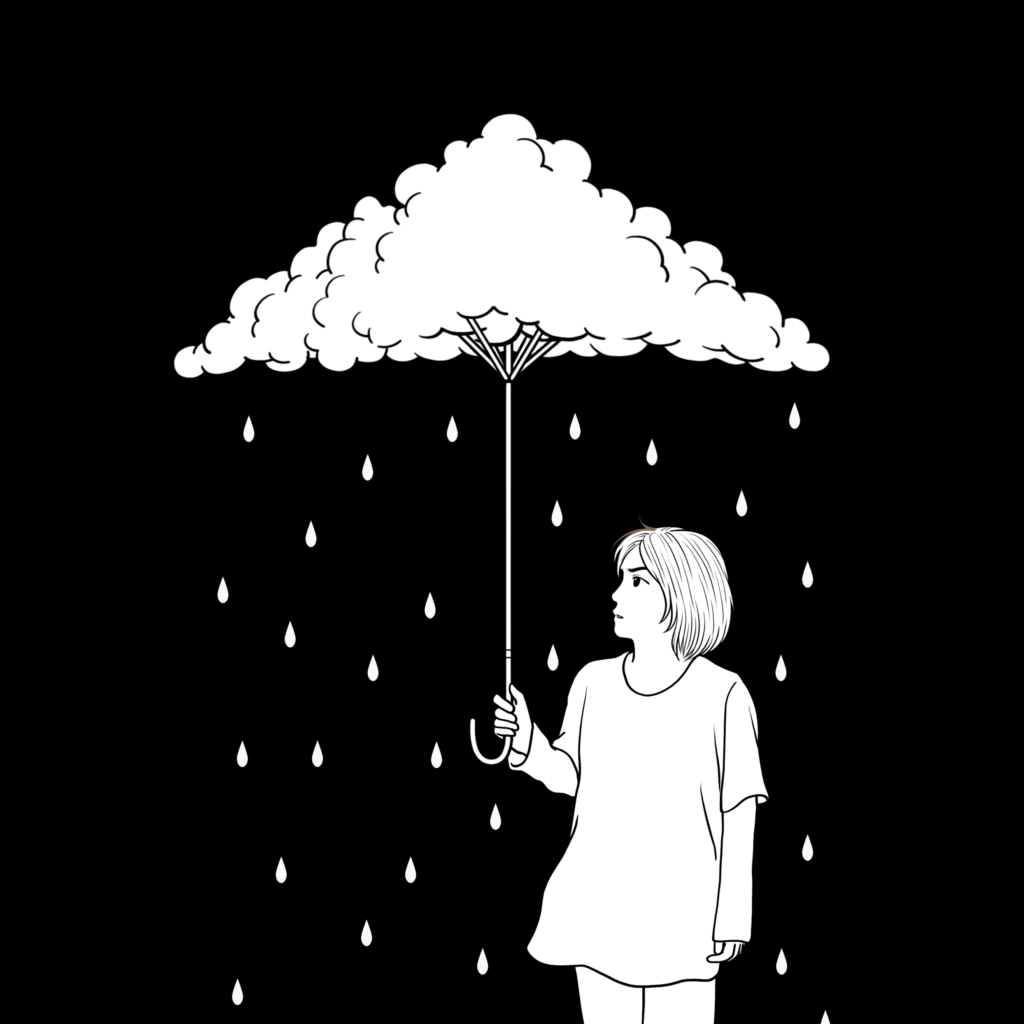
Just when I thought all that had to be said about bullying had been said, I met my loss of reflections around it, marking its territory in unavoidably stinky ways. Yeah, I’m a week late in delivering this daak & whilst I want to blame the brain freeze caused by antibiotics, the analyst in me doesn’t buy that answer. Blink if you’ve been bullied. Sigh if you’ve been ‘casually’ bullied. Pause if you’ve been a bully, especially in culturally sanctioned ways. While it is the necessitated idea that ‘bullying as an act be condemned’, it is also conveniently necessitated that the experience of bullying- as a bully or bullied, be stamped with the sanctioned response towards it. In other words, even before bullying has come to be symbolized by the mind, it is condemned or casually granted, aka, given meaning on our behalf. ** Sounds patronising! Then how is determining meaning or assuming one meaning on behalf of the other not a rationalised form of bullying? When the very genuine attempt at fathoming bullying is riding on the ideals of patronising (telling someone what is good/bad for them), exclusion & legitimisation (only certain acts get to be condemned as bullying), it is worrisome but true that bullying is more pervasive, ordinary, and omnipresent than we’d like to believe. So this is a call out not only to Karen, but the Karens within all of us. Any turn you take, there has been bullying- there’s bullying in families in the garb of care, bullying amongst close friends as a norm of friendship, bullying at the workplace as acceptable hierarchical behaviours, bullying in intimate relationships muddled with affection, bullying via money, via gatekeeping, via manipulation, via gaslighting, bullying in the name of help, in the name of strengthening, in the name of canoodling. We’re born into a system of bullying & being bullied. Alas, this piece of writing will not be able to ascertain how we get out of this loop, it will not be able to protect your kids (furry, green or otherwise) from the detrimental acts, it will not be able to soothe your memories emerging from corners of your mind. All this piece can do is, bring bullying from the corners of the dark realities to broadly lit, consensual centres. The hope is to be disillusioned by the distance we assume from bullying and recognize it as a psychically & generationally governed method of separateness, object representation and personal narrative. → Separateness It would not be wrong to start by highlighting psychoanalysis 101: since birth, the infant’s motivation towards separateness becomes the life force that helps them survive, and sustain. From Freud to Mahler to Klein, psychoanalysts have been in consensus that separateness from the primary caregiver is a developmental milestone that forges a healthy sense of self. This is all lovely until we look at the tumultuous process that goes behind enduring this separation- the threat of loss, the experience of abandonment, the impossibility of control and so on. This linear-looking psychic phenomenon, essential as it is, often finds itself spilling over moments where separation is not guaranteed, but created– it spills over in the façade of achievements (establishing that one is better than the other), it spills into the legitimacy for titles (any title- Dr, Lt., Sir, etc work only as a means of separation), it spills on to cornering the other who we must be separate from (any religious/social group). Each individual is both the bully and bullied, and an aspect of “mutual recognition” resides in acknowledging the pleasure as well as the pain in our co-participation (Freud, 1921). When the expectation & rewards of separation are aligned with the developmental demands & social structure, to manage how that separation is played out is a naïve act of putting a band-aid on a bullet wound. → Object Representation The concept of object representation speaks of the internal images that the child creates, determining the importance of early object relations in shaping an individual’s intrapsychic world & patterns of relating to others. Do you ever find yourself splitting the world (or a person) into rigid categories of “all good” and “all bad”? This splitting surfaces in our own incapacity to integrate the positive & negative into a cohesive way, that may give proxy to benefit of doubt. The ideals of ‘good’ vs ‘bad’ are unconsciously sewn into our minds, even before we begin to recognise them as coming from within or the outside. These ideals manage our expectations of others; they weave feelings that demand to be felt. Now imagine these unconscious aesthetics meeting a splitting reality that is far from inclusive and sharply perpendicular in its exclusion. In other words, the mental apparatus of ‘part objects’ (Klein) continues to be played out in the world where one, often not even a significant part, of a person/ group is enough to cast exclusion or bullying; or where another singular part of one’s being surpasses all judgement & logic to grant them the privilege. Such distorted object representations of the world where being born on one side of the line is callous, where accessibility is a privilege, where language is used to separate & inclusion comes with protest speaks for Ashis Nandy’s idea that “modern colonialism won its great victories not so much through its military & technological prowess but through its ability to colonise minds, in addition to bodies” (2009). In such a distorted world of impaired object representations, emotional attunement is compromised. The question this raises is, how far can individual sensitization go in a world that is running on the terrains of primitive psychic structures? → Personal Narratives And this is where it all gets too real. This is where painful, traumatic narratives of bullying beseech thought. This is where we get to hear “bullied become bullies”. A number of analysts believe that children who are subjected to bullying, abuse or mistreatment often internalize & adopt aspects of the aggressive behaviour they endured. It’s as if their mind says “If you can’t beat them, join them” as a way of

Psychoanalysis & Social World

Behind the ‘Sliding Scale’

Imagine taking a luxurious catnap on a freshly ironed piece of clothing— a cliché cardigan, if you may, only to wake up and realize that while your inner world is rich, your bank account might be echoing with emptiness. Sounds familiar, eh? Therapists are the professional listeners, emotional shock absorbers, and mind untanglers (or am I just making it sound cool?)— yet behind the calm nods and knowing silences, many are wrestling with a different kind of tension: the complex financial realities. Despite years of training, an overflow of compassion, and the daily task of stitching up the frayed edges of others’ lives, therapist’s own economics often looks less like stability and more like an unpaid internship in emotional labor. Take 1: The Paradox of Professional Care Many therapists don’t just step into this work- they are shaped by it. As children, they learned to read the room before they knew how to read, to soothe others before they understood their own needs. Caring became second nature, but so did disappearing. This early act of self-abnegation, much like the repression of instinctual desires, sets the stage for a career marked by both immense empathy and profound self-neglect. The financial undervaluation of their labor mirrors the split between the idealized self & the needy other. In offering care so freely (literally), many therapists unknowingly re-enact a familiar dynamics- an existence where tending to the Other was essential, as the survival of the child depended on them. The stakes, interestingly, shifts from physical survival to psychic survival in these enacted dyads. Take 2: When Expertise Meets Economic Reality The economic landscape for therapists is riddled with contradictions- the work is sacred, yet undervalued; necessary, yet often underpaid; built on deep care, yet leaving many struggling to care for themselves. Generational narratives of sacrifice whisper that passion should be enough, while the realities of rent, bills, and burnout tell a different story. Further, the shushh-ness around discussing money feels as taboo as admitting personal vulnerability, as if these ideas stand opposing the archetype of the work. And then, there’s the ache of never feeling ‘good enough’—the quiet, relentless pull to train more, learn more, invest more in becoming the therapist they believe the patients deserve. They pour into countless trainings, supervision, and therapeutic spaces, not just out of professional duty, but from a relentless hunger to prove— to the self, to the field, to some unseen authority, that we are enough. Alas, this is not just a professional dilemma, but an internalised structure— an unconscious contract where value is tethered to sacrifice. The superego, steeped in ideals of selflessness, wages war against the id’s fundamental need for security & pleasure, leaving the ego to negotiate a compromise that rarely satisfies either. In this dynamic, earning feels like taking, and taking is being greedy, being excessive. Take 3: Breaking the Silence Let’s face it— just as loneliness creeps in when we deny our own need for connection (remember the newsletter last month?!! Remember??- NOD!)…  yeah, so just as loneliness creeps in when we deny our own need for connection, financial deprivation sets in when we neglect our worth. Therapists often bear the double burden of emotional labor and economic strain, all while upholding an archetype of invincibility. I mean, seriously?! In the spirit of psychoanalytic inquiry, we must ask: How do these economic pressures shape the very identities of therapists? And if care was no longer tied to sacrifice, would it threaten the very structure upon which many therapists have built their sense of ‘good enough-ness’? P.S. If you’re a therapist reading this, consider this a gentle reminder: you put in a lot in your work & your expertise is invaluable, but so is your well-being, both emotional and financial. It’s time to rewrite the internal narrative of deprivation.  Recognising the fiscal challenges is not a confession of inadequacy but a needful step towards integrating the repressed parts of oneself. Therapists must dare to confront the economic realities, challenging the old narratives of self-denial that no longer serve them. Only then can one reclaim not just the financial stability, but the full spectrum of one’s being. P.P.S. Money is never about just money…

Psychoanalysis, from the outside

Thumb Tired Yet?

Dear Hooman, It’s me again— Anar Dana, your favourite, basically only, feline philosopher. I’m writing this piece of art awoken in rage from my short cat-nap of 5 hours, which was brutally ruptured by the relentless tik tik tik tik. Guess what’s that? Yes, I’m here to talk about something humans do obsessively but never quite admit to- doomscrolling. I mean what kind of a species construct a word with ‘doom’ in it and yet cling on to it? I mean, at least call it hope-scrolling and lie to yourselves properly. **rolling eyes** Nevertheless, I don’t have thumbs, so scrolling isn’t in my skillset. But I do have a front-row seat to my human’s midnight rituals of infinite scrolls. And trust me, this was not revealed before I adopted her. Let’s get something straight- Doomscrolling isn’t a hobby; it’s a coping mechanism. Or should I say, a mechanism to avoid coping? It’s not unlike my urge to knock over your coffee cup— impulsive, habitual, and vaguely self-destructive. Take 1: Doomscrolling as a Defense Mechanism- obviously! Humans have this thing called the “fight or flight” response, right— though let’s be real, most default to freeze. Doomscrolling, my dear friend, is just another way to freeze, but with your thumb in action. It’s a defense mechanism wrapped in technology, a way to brace against the onslaught of existential uncertainties of life without actually engaging with it. It’s a dissociative manoeuver- a form of emotional anaesthesia— engagement without involvement, awareness without containment. But here’s the twist: this passive engagement isn’t just ineffective, it’s psychically disruptive. Rather than symbolising and processing what we’re consuming, we’re flooding our psychic apparatus with stimuli, & overwhelming the mind’s capacity for containment. Instead of achieving mastery over the anxiety, you’re caught in a repetition compulsion, compulsively seeking distressing information in the hope that this time, it will feel different— except it never does. It’s the psychological equivalent of licking the same spot on your paw— anxiously tending to the discomfort in a way that only deepens it. The more you scroll, the itchier the mind gets. Take 2: The Algorithm Knows You Better Than Your Therapist Let me break it to you: You think you’re in control, but really, the algorithm is the one holding the leash- which I hate, but I have one to guide my walks. Don’t you laugh, you’re no different, Karen! I’m just highlighting the obvious here, that every like, swipe, and pause you make is data— it’s a psychological map of your desires, fears, and curiosities. The algorithm knows when you’re lonely, when you’re bored, and even when you’re vulnerable. It nudges you toward outrage when you seek connection, feeds you nostalgia when you crave meaning, and dangles catastrophe before you when you’re searching for control. Ever notice how the feed shifts between the excessive, the life quips, and the oddly satisfying? If Freud were alive today, he’d probably marvel at the sheer genius of this modern-day pleasure principle- the feed gives just enough stimulation to keep the scrolling going, but not enough to satiate the relentless hunger. It’s the digital equivalent of chasing your tail— fascinating, exhausting, and ultimately futile. Take 3: What Would Freud Say About Your Feed? Freud might argue doomscrolling is a modern manifestation of the death drive— a compulsion to repeat the same behaviors despite their destructive consequences. The difference? Freud didn’t have to deal with clickbait headlines that speak to the raw parts of your being. So, what’s the antidote? I don’t know. Who cares if you doomscroll, right? It’s not in the DSM (yet), the tech people hardly care and even though you’d think that I do, I realllly don’t because I love when you watch those cat videos. CATS RULZ! The question beyond this point is- do You care? And if in some god-forsaken world you do, it might be interesting to experiment with noticing what you’re being fed and why it’s so hard to stop. And as for my unsolicited but precious advice, human: Next time you catch yourself scrolling, ask what you’re really looking for. Is it connection? Control? Or just a distraction from that gnawing inner world? P.S. I hope for a day, you’d be bored with your feed. P.P.S. Isn’t it fascinating it’s called a ‘feed’?!!

Psychoanalysis, from the outside

The Epidemic of Loneliness

Dear Hooman, I’m writing this piece after my short 5hr catnap taken on a freshly ironed piece of clothing- a cliché cardigan, to be precise. Now, as a cat, solitude is my preferred state of being. I bask in it. I stretch luxuriously in it. But my human- she’s an epitome of clinginess! Which demands I share my feline wisdom about something that lurks in the quiet corners of everyone’s life: loneliness. I’m not the one to quote stats, because I’m bad at math & protruding thumbs, but a simple Google search will give you some concerning data. Convincingly, loneliness is the epidemic all humans seem to grappling with— especially & silently those who spend their days holding space for others, mostly over screens lately. Yes, dear psychotherapists, I’m looking at you. Therapists are professional listeners, emotional containers, and untanglers of the human mind- a linear, solitary, endless job- where the holding for the self is not only limited, but also deemed unexpected. Yes, even in your own therapy, Karen! Now, many therapists who enter the field, at some point, have been the emotional caretakers of their own families. The skill of attunement— reading between the lines, sensing the unsaid wasn’t just learned in training; it was a survival tool long before that. ** Am I right or am I right? ** Perhaps it started as a way to manage chaos, to make sense of unpredictable caregivers, to bring order to emotional disarray. Or maybe it was a way to feel needed, to gain a sense of purpose in environments where they otherwise felt invisible. Whatever the origin, the result is often the same: it’s easier to provide care & be the rescuer than to seek that labour for oneself (multiplied by 10 if you’re a woman). Almost as a vicious cycle, this early conditioning feeds into the myth of self-sufficiency. The belief that because you’ve made a career of supporting others, you should somehow be immune to the very struggles your clients bring to you.  ** RIP Logic. ** The reality, despite our need to resist it, is that no amount of training/analysis undoes the fundamental human need for connection. There, I said it!! And when therapists neglect this need in themselves, loneliness sets in— not because they are alone, but because they don’t feel permitted to seek the same care they so freely offer others. Let’s also take it a notch further.. because, why not?! Therapists, as a rite of passage, have been the ‘black sheep’ of the family. (Not that I know what a black sheep is… I don’t really step out!) But what I’m referring to are the non-confirming choices that you often make in your personal life- the boundaries you draw, the family narratives you challenge, the uncomfortable feelings you word, & your impossibility of sweeping things under the carpet (something I love!). This difference can lead to a wider sense of alienation- feeling like an outsider in one’s own family. And when you are continuously resisting the patterns of generational trauma, it creates a quiet, surrendered kind of loneliness. You might find yourself holding back your struggles because “you should know better”. And just like that, what Winnicott finds to be essential- the capacity to be alone, in the presence of the other– never quite finds the Other to build itself up. Now, let’s shift the perspective and address the elephant cat in the therapy room. Loneliness isn’t just about being alone— it’s about feeling unseen, unimportant, or disconnected. Therapists know better than anyone how complex and messy humans are, and yet, there is an archaic struggle to reveal their own messiness. After all, how does one go from being the all-seeing adult to admitting, “Actually, I feel lost too, my oedipal father”? ** this was waiting to come out ** No wonder therapists in therapy make for the most convoluted clients- with all their defences in place to safeguard their vulnerability around the most vulnerable narratives. sighhh. This fear- of judgment, of rejection, of shattering the carefully constructed image of competence evades the experience of being held, for the opportunity never presents itself. For therapists, admitting loneliness can feel like an indictment of their professional and personal selves. After all, if connection is what you help others build, shouldn’t you be immune to this struggle? P.S. In case you’ve missed it, we’re talking about the shame associated with this loneliness- the one that takes you farther in your own self-corrective measures. P.P.S. We hope you find your people— and if we can help, hit reply & let us know how.

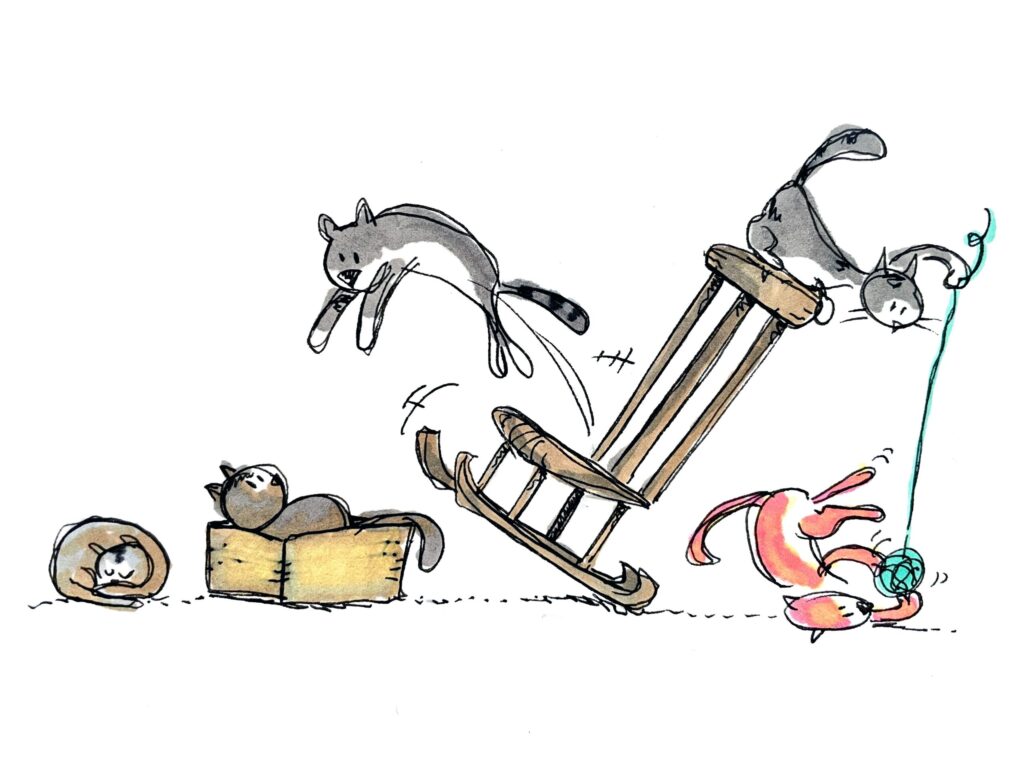
Illustration of cats in a chase — used in article on bullying and power dynamics, Lost and Found Psychotherapy
Clinical Writing

Confusions 101

Can you imagine me staring at a corner of the room, as if it contains the secrets of the universe? Just an uninterrupted gaze into nothingness. That, my friend, is the face of true contemplation. You may call it daze or confusion, but I assure you, it is just the mind stretching itself into a shape it has never taken before. What I’m trying to say is that ‘confusion’ has a bad reputation, like yours truly. Generations before ours have treated it like a glitch in the system, a sign of incompetence, an embarrassing thing to admit, like yours truly. Saying “I don’t know” as a response to what our parents question about our lives feels like a tiny failure, a break in the armour of certainty we’re all supposed to wear. But what if confusion is just the mind’s way of saying, “something new is happening here.” Psychoanalysis has long held that before we make a breakthrough, we enter a fog. We fumble, we feel lost. The world stops making sense in the way it once did, and it can feel unsettling. But let me propose this- confusion is perhaps a symptom of an impending shift. Think about it- have you ever stumbled across an old journal entry or a slam book (depending on which generational alphabet soup you belong to) and cringed at how certain you once were? The self we are today had to grow through the disillusionment of that certainty. And that growth? It wasn’t a neat, logical process, it was messy, uncomfortable, and often, utterly confusing. Psychoanalysis teaches us that confusion is not a failure of thought but a space of psychic movement (or the shift, as I’d like to call it). When a child encounters the unfamiliar, they don’t demand immediate resolution; they play with it, oscillate between knowing and not knowing, constructing and deconstructing meaning. Yet, as we grow, we become intolerant of this in-between state, rushing to clarity as if ambiguity is dangerous. What if, just what if instead of fearing confusion, we could sit with it? What if we could treat it like a conversation rather than a crisis?   Freud, my good old friend, taught us that before meaning arrives, we often get disoriented. The ego resists change, after all, it likes the known, the named, the organized. But when the unconscious bubbles up with a conflict or a wish or a memory that threatens the current order, the psyche doesn’t offer clarity. It offers a rupture. Psychoanalysis 101. I know, Karen! When a conflict, wish, or memory bubbles up from the deeper terrain- one that the ego isn’t ready to see or say— it creates a ripple in the structure of our psychic order. Suddenly, what made sense yesterday doesn’t today. Words stumble. Thoughts wander. We find ourselves torn between two feelings that don’t quite belong in the same room. And the psyche, in its infinite wisdom, still doesn’t offer a crisp answer. What I’m talking about is a feeling with no name, a mood that doesn’t match the moment, a fog where we once walked with certainty. You know those moments, don’t you?! Like when we’re simply going about the day, but suddenly overcome with a wave of sadness— no context, no cue, just a soft ache that settles in. Or when we’re surrounded by friends, laughter echoing like music, and yet there’s a strange emptiness clinging to the edges of the joy. Or those quiet mornings when everything is fine— the coffee’s hot, the calendar’s clear— but we find ourselves inexplicably restless. These aren’t glitches. They’re signals. Whispers from within, my furrend. The truth is, these quiet rebellions of the heart can’t be undone (and you know that!). They wait for us to pause your scrolling thumbs, our busy mind, our rush toward answers, & our clever wisdom is replaced with childlike ambiguity, and adult-like mistrust. Perhaps, the next time we meet each other in the haze of not-knowing, you’ll find me in either of these: 🐾 Pawsing before you panicking. Instead of scrambling for an answer, can we notice what’s shifting inside? What assumption is being challenged? What old way of thinking is no longer working? 🐾 Not being a Karen. In times when confusion is a sign that we’re encountering something new, can we non-dramatically frame it as curiosity rather than catastrophe? 🐾 Resist. Always. Can we give ourselves permission to be in the process & not resist the urge to solve ourselves like a math problem? 🐾 Trust that clarity will come, when it’s ready. As a cat watching the world from the windowsill, sometimes all I to do is sit and let things reveal themselves. And look, I get it. The urge to tidy up your confusion, file it under “Not Now,” and carry on with your to-do list is strong. But confusion doesn’t like being sidelined. Leave it unread too long, and it’ll start getting creative- showing up in the middle of small talk, hijacking the focus during meetings, or making us cry over an ad about butter. Confusions are anything but subtle. It wants airtime. Ignore it, and it’ll turn the inner life into a group chat we can’t mute. P.S. So, if you’re feeling confused, congratulations. You’re someone in the making!  P.P.S. Does this make sense or now you’re just loving the confusion?!!

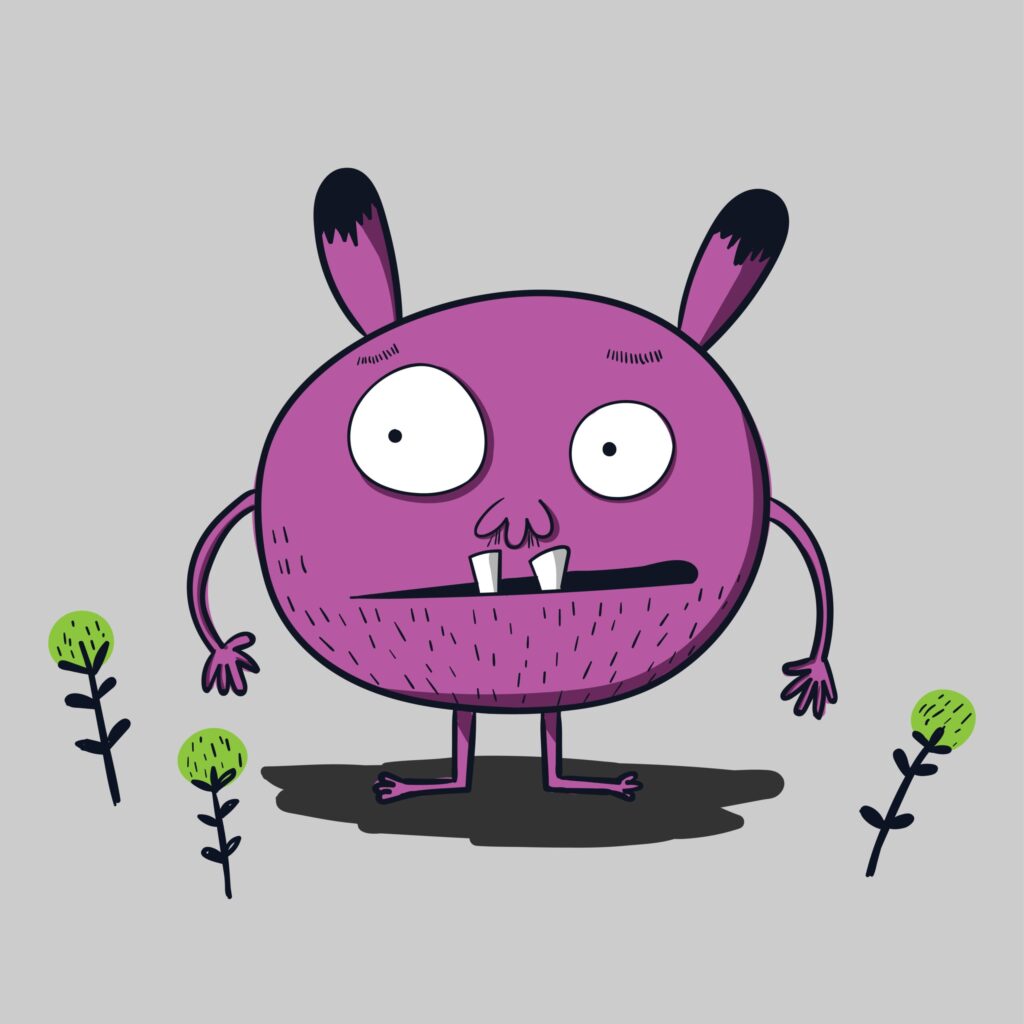
Cartoon illustration of a purple monster — used in article on scrolling and longing, Dialogues by Lost and Found Psychotherapy
Clinical Writing

Where Rage Goes to Hide

Some days are hard. Not in any character building, retrospectively grateful, this will make a great story someday kind of way. Just hard in that low, grinding way where you find yourself daydreaming about karma, cosmic justice, and a higher power that is finally, finally, taking notes. Have you had one of those days recently? Where something within you collapses without warning. Where a shield you had wrapped comfortably around yourself slips off, and the soft, vulnerable core of you is suddenly, embarrassingly, in plain view. It is frightening, isn’t it? The exposure of it. The sense that something you had relied on to keep you intact is no longer there. And it all feels unfair, doesn’t it? And then comes the harder question. Who do you face in those moments? Who do you sit with? Almost always, I think, it is a part of yourself. A part that gets activated too quickly, scrambling to fix it all, to put the shield back on, to make everything fine again. But what happens when life throws something at you that cannot be fixed? When the shield does not go back on? Who do you meet then? The rage monster, perhaps. The one ready to swallow everything whole and breathe fire. As I write this, I feel a pinch in my throat. A wave of despair. The uncomfortable realisation of how little of any of this is actually in our control. I attended a talk by Dr. Salman Akhtar on inner torment recently (Inner Torment: Guilt, Self-loathing, Deadness, and Suicide, 4th Feb’ 26), and he said something I have not been able to put down. He mentioned, with the easy candour of someone who has spent decades elbow deep in the human psyche, that he keeps a private, internal list of people whose deaths would make his life considerably easier. He said it with a chuckle. The audience, I imagine, laughed. And in some corner of me, something shifted too. A small relief. A sigh. Do you know that feeling? When someone names a thing you had not let yourself name, and your shoulders drop a little? For all the mental health language we now have, for all the talk of pain mattering, of anger and grief being deeply related, do we actually talk about how hard it is to really carry it? To experience it? To express it? To stay with it long enough to even know what it is? Or do we tend to wrap it in other things. Lightness. Humour. Hope. Avoidance. Why is that? Why is rage so hard to be near, even our own? I find myself wondering whether it is because rage and loss, in their full form, really do challenge things. They challenge the polite agreements we have made with ourselves. They challenge the version of us that prefers to be intact. The death drive is not the easiest dinner party topic. But you cannot quite deny that it exists. So when Dr. Akhtar said it, the audience laughed. Because most of us, the reflective, emotionally literate, evolved minions of the wisely world, have a list too. Don’t we? We just have the cued-in repression to file ours under “thoughts we are choosing not to think.” And the list is interesting, isn’t it? Not because it tells us anything flattering about ourselves, but because the moment you actually look at it, it stops being a fantasy about other people. It starts revealing something about you. Underneath the irritation, underneath the sharp edge of who wronged whom, there is almost always something older. Something that looks, very suspiciously, like grief in a costume it can move in. The actual story, more often than not, is loss. Freud, in Mourning and Melancholia (1917), invited us to think why some losses don’t look like grief at all. Why they turn inward. Why they curdle into self attack, restless rage, and that low hum of being annoyed at everyone for no traceable reason. His thinking, as I understand it, was that sometimes we don’t just lose a person, or a thing, or an idea. We lose the version of ourselves that was built around it. The self we were inside that relationship. The future we had silently furnished. The person we were, mid sentence, in the middle of becoming. What happens to that version of you, you think? Where does it go? So when rage shows up uninvited, when it feels strangely too big for whatever is in front of you, what would happen if the question stopped being “what am I angry at,” and became “what am I afraid of losing”? Or, more honestly, “what have I already lost, and not yet let myself feel?” Which brings me to the stranger, softer side of all this. What do you hold close to your sense of self? Not cling; but genuinely hold. I hold my therapist identity rather tightly, if I am being honest. Possibly more tightly than is strictly advisable. It is what I reach for when I need to feel most like myself. What is it for you? A role? A relationship? A ritual? A particular way of making your morning chai?  I believe the self is not a floating, abstract thing. It parks itself in the concrete. In the specific. In the small, unglamorous architecture of how we live. I find myself gluing myself back together in unceremonious places. The way my cat blinks when the afternoon light hits and she decides, temporarily, that existence is acceptable. The smell of rain on warm pavement. Freshly washed clothes hung up to dry. Misty flowers at an hour when everything is still a little blurred. Small, unremarkable moments where something in me quietly goes, oh… There you are. We’re still here. We rebuild ourselves more often than we register. We carry grief that does not have a form yet, and still make plans for Tuesday. We hold rage that is really loss in disguise, and still show up. We come undone in ways we don’t fully understand, and still, somehow, find the

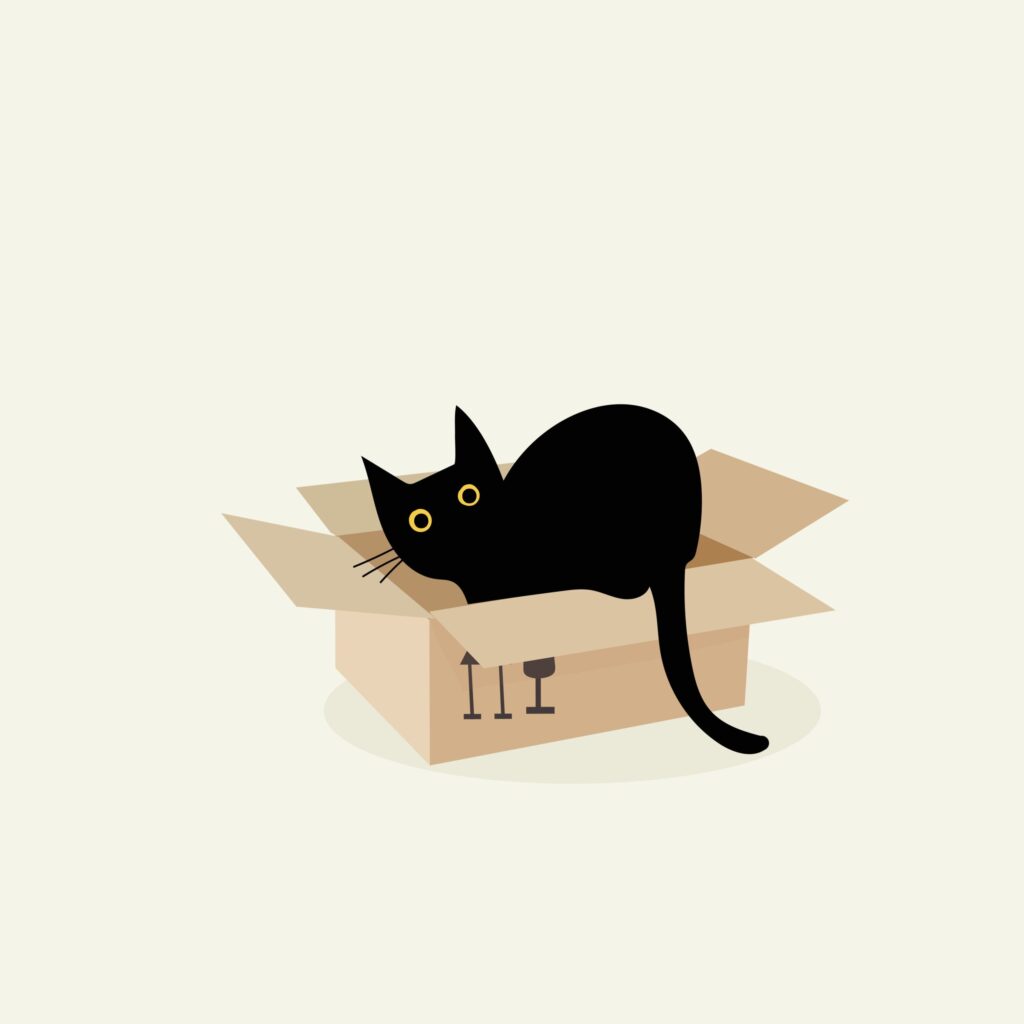
Minimalist illustration of a black cat sitting in a cardboard box — used in article on bullying and power, Dialogues by Lost and Found Psychotherapy
Psychoanalysis & Social World

Think ‘out of the box’, but stay ‘inside the lines’

It’s appropriately windy outside & I’ve had my two breakfasts, along with four baths & one torn amazon box… all in all, it’s a good day to take matters into my own paws and spew some facts straight. For starters, my name is not Anar, it’s Anar Dana- I’m not a tedious fruit, I’m a flavour, a metamorphosis, a memory. BOW. Yes, my human is conspicuously twisted to name me, only to rename me, and then they wonder why my kin doesn’t respond to these uncharacteristic pseudonyms given to us. Our kitty party includes angoor, chamak, elaichi, laung, kishmish, adrak & damru. I mean, come on humans… & you’re surprised about you making ‘bad choices’. So, I’m not a therapist. But I’ve sat in the therapist’s chair long, wide & forcefully enough to examine the irony of being human. And while I don’t have a collarbone (go do your research, human), I do have a lazy bone in me so let me get to the point. — You’re taught to colour between the lines, whilst you could’ve just moved the lines. — Your silence is dissociative, not contemplative. — You eat trash… None of my business though, your dogs can deal with it.  Point 1. There are very few things that bring the human clan together beyond their racial & geographical differences. Ironically, those few things are often their misplaced priorities… I mean what is this mass obsession with coloring inside the lines? You teach your tiny humans to master control, behold urges, follow rules, only to turn around & expect them to be playful, creative & free. Is it just me who can see through the BS that you want your clan to think ‘out of the box’, but stay ‘inside the lines’? Yes, I’m told that discipline is a form of love too, but this sounds like some twisted version of colonizing the mind, where the rules might vary, but the experience of them continues to be threatening to the developing ego.  The hyperawareness of the lines, more than the colours, crystalises for the mind the essentiality of self-obstruction– that one can only restrict the fantasies & be enticed by the other (possibilities, people, life). This self-obstruction is the neurotic gift of civilisation that dooms any attempts at change. “We spend most of our lives anxiously hoping we will change… and doing everything we can to stop this happening” (Phillips, 2023). No wonder you’re all fascinated & doom scrolling my kin uninhibitedly knocking things off the table.  Point 2. Let me enlighten you, human. Cats don’t meow at each other, they only meow to communicate with humans, because we’ve learnt of your discrediting relationship with silence. Your silence, laden with strings of withdrawal, withholding & wishfulness, is a communicative tool rather than a contemplative space. Salman Akhtar, in his description of 8 types of silences talks about how silence is as demonstrative as talking, and yet humans cannot be farther away from it.  Silence is viscerally experienced as an absence, an empty space or an anxious position, demanding the psyche to dissociate into fragments of self-soothing. I seldom wonder where my human is when she’s silent in a session- is she waiting in a void, or is she thinking about her thinking?  If Maroda is right, the analyst is often too comfortable not engaging relationally with the silence. It becomes a moment of respite from the collusion with the analysand’s unconscious, a return to the state of nothingness, a complete collapse of the relational dialogue.  I can vouch for that, for I take the pains of rescuing my human from her silence by chewing off her books mid sessions, but her thanklessness speaks of an unexamined interpersonal exchange.  So, dearest human, I often gaze into many antidotes to these orchestrated communal living that humans have internalised, and normalised in an attempt at staying integrated. But here are a few purrls of wisdom.Use a litter box. (read again*)If it fits, it sits. Reclaim.It’s okay to draw boundaries, but please don’t start colouring in them for cat’s sake!You will not be liked by everyone. You’re not a dog.Someone somewhere is joyed because of you.I’ve done my part for the day, or year. I must now surrender myself to my zoomies & sprint around the house for no reason… something many would wish to do too if not for compromising their model of sanity. P.S. Adult relationships find an undeniable mirror when you get a cat, or become one.P.P.S. pspspsppsps.

On Supervision

Let’s Talk Supervision!

This newsletter is not written to you at 4:30 in the morning but at 2:30 in the night. *Not my proudest moment* But… there’s something about the deadness of the night that allows you to touch your own psychic deadness- or what Eigen illustrates as, “pockets of deadness that are relatively constant”. *……… buffering* Basically, when sleep has been ruptured, what would an analyst do without dreams? They turn towards the prepossessing deadness. I reckon I’ve been sitting on this piece for far too long- weeks in writing, years in mind, for it would crystalise in my mind & yours, the scathing impact of an unkind, holier-than-thou clinical supervisor– a part object we (need to) internalize as a marker of our work. I mean it doesn’t take a genius to agree that bad supervisors can deeply damage you individually & professionally; it is no surprise that many professionals have had an experience of being bullied (not using this word lightly) by their supervisors.  So yes, if history is any evidence, bad supervisors can leave an imprint of low self-worth, & a sticky imposter syndrome that freezes us & our praxis in our student era.  They tend to make you withdraw your curiosity, enact your ambiguity, fear your despair- all pieces that come together to form the therapist self. In totality, you lobotomise the health of an early career therapist & leave them hollowed out like an echo chamber of the internalised inept supervisor. *Fasten your seat-belts, it gets only more dramatic*  So let me put this straight… I’m an ardent supporter of supervision, and coffee. It’s unsettling to assume that a therapy practice can rely on the relational (decaffeinated) unconscious of one person in a room full of affect, projections & transferences.  Or as Ogden would ascertain my point (pfff, I wish)- “the supervisee creates a ”fiction” about the patient and about the therapeutic relationship, a fiction that unconsciously selects material in keeping with the supervisee’s own unconscious needs, anxieties, desires in the moment”. So yeah, while this is just one of the many complex ways in which the therapist’s & patient’s unconscious collude, it is safe to pin that “if we fail to take into account our own conflictual responses, we risk enacting that which we should be interpreting” (Irma Pick, 1985). And yet, as necessary as it is, supervision is also a deeply evocative & vulnerable space. It takes the therapist bringing in their authentic self, their helplessness & the unavoidable errors for scrutiny & support. But what’s (sadly) left unrecognised is that supervision is largely relying on the therapist’s intuitiveness to gauge the mis-attunement, their willingness to learn & the courage to showcase the incomplete works.  Sooo, basically they are kind of doing an amazing job by just showing up with all their truths & trysts. And then all it takes is a Karen-like supervisor with their narcissistic impunity, messed-up politics & gaslighting skills to convert the process of honing into horror. And just like that, something that had the potential to be pivotal & profound gets foreclosed. How do such oppressive people become therapists, you may ask… well, I believe this question is more satisfying & empowering than the answer.  The concern, however, is not so much the systemic existence of such authority figures; the concern is the withstanding impact they have on younger therapists- either normalising the toxicity of the process or gatekeeping the process altogether. Twist the power of knowledge & button it with the language of analysis & you have the recipe for keeping the other confused about their own subjective experience- and then, leave it to the higher-ups to do this job impeccably!  Alas, you might know of at least one supervisor who has had a detrimental impact on someone, leaving them not angry, but miserable. The misery is in not being able to imagine there is another way of knowing, that there is a possibility of relatedness without the hierarchy, that this mean remark is not a me problem but a you problem. No, I’m not advocating canoodling, Karen! I mean sure supervisees need to be nudged & questioned, & well, also be made to remove their unconscious floaties that are keeping them afloat without swimming (that’s fun!), but what’s at the centre is, using McWilliams words, “when respect is maximised and shame minimised, most professionals open themselves eagerly to learning”, especially in a cultural landscape like ours where marginalisation & humiliation has been a historical weapon of oppression. So, am I saying supervisors need to be of a certain temperament & personality? No. Am I saying they need to be ‘sweet’ & ‘loving’? ew No…! I’m just asserting the need for an analytic attitude- a crafted stance of thinking, listening & engaging that is facilitative of the analytical process– within the supervisory dyad.  Now, not to sound holier-than-thou myself… I’m inclined to turn to the endless archive of the ideal supervisory process. But, our favourites return to our rescue in brief- Nancy McWilliams– In one of the discussion groups with Nancy & her therapisty blue cardigan, she spoke of the supervision process being a space to bring out “love, work and play”. For her, the supervisee needs to be met with an atmosphere of solidarity and sameness to be able to unravel the undermining moments of the therapy process. How brilliant is that in those 2 hours, she never used words like ‘teach’ or ‘wrong’, instead she used ‘vitality’ & ‘forgiveness’. Perhaps, what it assembles, for me, is the permission that there exist other ways of being and becoming a supervisor, that are built on the respect for both- communality and individuality. Ogden & Eigen– What an opportunity to bring these two together in thought! Thomas Ogden in On Psychoanalytic Supervision & Michael Eigen in Being Too Good urges us to drop the act of righteousness & enter a state of “guided dreaming”- to do the conscious & unconscious work of emotional attunement. They speak of a parallel process that, if enabled, mimics the therapeutic experiences onto the supervisory dyad. I mean, how ill-placed one’s psychoanalysis has to be to speak of transferential material from an arm’s length without having to look at the spillovers in the supervisory

Clinical Writing

“Play is the work of a child.” — Maria Montessori

You might not know me… or perhaps you do!  Well, who knows anyone anyway… #deepbut this isn’t about me, this is about- Shivoy! Shivoy is my two-year-old neighbour who often comes to my house to play. When I open the door, he rushes past everything and everyone and goes straight to my room to my musical instruments. For someone who cannot even spell harmonium, he somehow finds his way to them every single day. His mother often tries to take him back home, but his tiny body resists with all its strength. In that moment, it feels as if his whole being is saying “let me stay here a little longer”. To be with those instruments is his play. And that is his work. At two, Shivoy does not yet have the language to say what he feels or wants. The toy becomes the medium through which he communicates. When he presses a key or taps on an instrument, something is happening inside him. Something is being expressed. Doing is taking place. We call it “just playing,” but if we look closely, it is serious psychological work. Children often speak through play long before they speak through words. This makes me wonder about something- what happens to play when we grow up? Somewhere along the way, work and play become two completely separate things in our minds. Work becomes something serious, productive, and often exhausting. Play becomes something childish, almost indulgent. As if enjoying what we do is suspicious. As if fun belongs only to childhood. When we hit a socio-culturally determined age, it sometimes feels like we are expected to quietly swallow our emotions and begin the serious business of life.  Work hard. Be sensible. Be mature. And of course, the sentence most of us have heard at some point: “Don’t act like a child.” It is said so casually, but it almost feels like an insult not just to the person being told, but to children themselves. As if being someone who has needs, impulses, and curiosity is something embarrassing. But children remind us of an inherited absentia. They remind us that human beings need spaces where they can simply be. Play is one of those spaces. In early life, care is experienced through continuity. A caregiver being there again and again helps a child slowly build a sense that the world is reliable. The infant may not need the caregiver every second, but their presence in the background matters deeply. Absence can suddenly change the infant’s world. It can feel like opening the fridge expecting food and finding it empty. The infant’s limitation is not the absence of feeling, but the absence of language. And so, love and care become a kind of psychic nutrition. Somehow it feels like a subscription model. One can avail all the services of being taken care of till a certain age. Not to say that being taken care of is a removal of accountability one should grasp. But in the moments of confusion and frustration, play becomes the bridge between inner feelings and the outside world. It is the space where fantasy, curiosity, frustration, and joy can all exist safely.  In play, a child experiments with reality. If we were to skip the laps of time & repairs, if Shivoy were constantly stopped from touching the instruments, he might slowly become an “ideal” compliant child. The kind who listens immediately. The kind who does not insist. But compliance often comes at a looming cost.  The instrument, his current way of communicating might disappear. And with it, his spontaneous gesture. The world often celebrates compliant children. They are easy to manage. They do not disturb routines. But inside, something important can quietly go underground- an authentic self. Literature says, when a child’s true self is allowed space to develop, it becomes a powerful buffer against life’s difficulties. When our internal world is allowed to exist freely, external reality becomes easier to face because it resonates with something inside us. Which brings us back to adulthood. How often do we find ourselves in similar roles? Obedient. Responsible. Functional. But sometimes unsure of what we truly want. Many adults slowly lose access to play, not necessarily toys, but the spirit of play. Curiosity, exploration, creativity, and doing something simply because it feels alive. Play for adults might look different. It might be music, cooking without a recipe, dancing badly in your room, writing, painting, or even having a conversation that wanders without purpose. Play is spontaneity in an hyper organised world. Play is not the opposite of work. Often, it is what makes work feel meaningful. The question then is not whether adults should play. Perhaps the question is- how did we become so uncomfortable with it? Sometimes, watching a two-year-old stubbornly protect his time with a harmonium can remind us of something we forgot a long time ago. That, perhaps, play never really disappears. Perhaps, it simply waits for us to return. That was my playful attempt at getting to know you. I’m Shruti Garg, psychoanalytic psychotherapist at Lost & Found Psychotherapy, who finds comfort sometimes in quiet corners & on other days, among people. Coming from the field of psychoanalysis and classical music, attuning to the smallest of emotion feels like a home and probably the only way to be.

Scroll to Top