Lost and Found Psychotherapy

Lost & Found

A Space for Psychotherapy & Being

Clinical Writing

Clinical Writing

Confusions 101

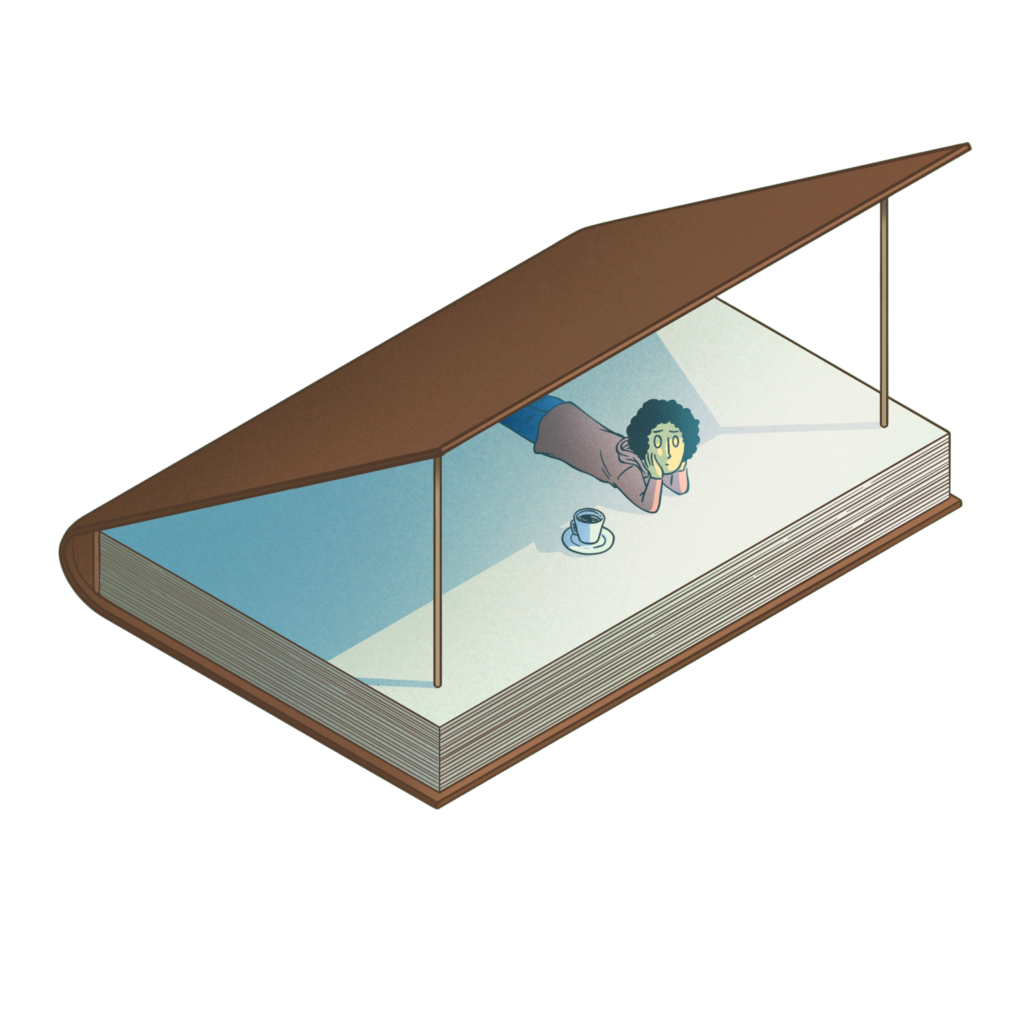
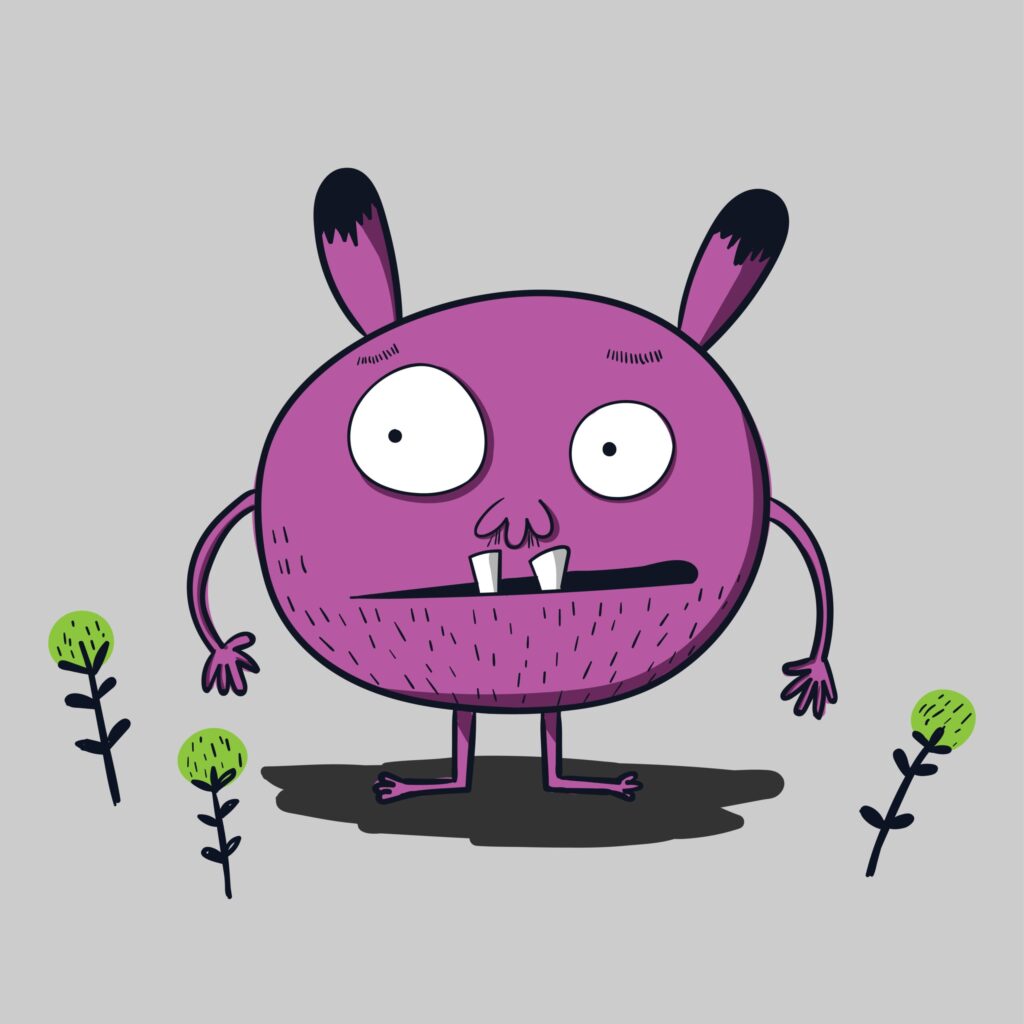
Can you imagine me staring at a corner of the room, as if it contains the secrets of the universe? Just an uninterrupted gaze into nothingness. That, my friend, is the face of true contemplation. You may call it daze or confusion, but I assure you, it is just the mind stretching itself into a shape it has never taken before. What I’m trying to say is that ‘confusion’ has a bad reputation, like yours truly. Generations before ours have treated it like a glitch in the system, a sign of incompetence, an embarrassing thing to admit, like yours truly. Saying “I don’t know” as a response to what our parents question about our lives feels like a tiny failure, a break in the armour of certainty we’re all supposed to wear. But what if confusion is just the mind’s way of saying, “something new is happening here.” Psychoanalysis has long held that before we make a breakthrough, we enter a fog. We fumble, we feel lost. The world stops making sense in the way it once did, and it can feel unsettling. But let me propose this- confusion is perhaps a symptom of an impending shift. Think about it- have you ever stumbled across an old journal entry or a slam book (depending on which generational alphabet soup you belong to) and cringed at how certain you once were? The self we are today had to grow through the disillusionment of that certainty. And that growth? It wasn’t a neat, logical process, it was messy, uncomfortable, and often, utterly confusing. Psychoanalysis teaches us that confusion is not a failure of thought but a space of psychic movement (or the shift, as I’d like to call it). When a child encounters the unfamiliar, they don’t demand immediate resolution; they play with it, oscillate between knowing and not knowing, constructing and deconstructing meaning. Yet, as we grow, we become intolerant of this in-between state, rushing to clarity as if ambiguity is dangerous. What if, just what if instead of fearing confusion, we could sit with it? What if we could treat it like a conversation rather than a crisis?   Freud, my good old friend, taught us that before meaning arrives, we often get disoriented. The ego resists change, after all, it likes the known, the named, the organized. But when the unconscious bubbles up with a conflict or a wish or a memory that threatens the current order, the psyche doesn’t offer clarity. It offers a rupture. Psychoanalysis 101. I know, Karen! When a conflict, wish, or memory bubbles up from the deeper terrain- one that the ego isn’t ready to see or say— it creates a ripple in the structure of our psychic order. Suddenly, what made sense yesterday doesn’t today. Words stumble. Thoughts wander. We find ourselves torn between two feelings that don’t quite belong in the same room. And the psyche, in its infinite wisdom, still doesn’t offer a crisp answer. What I’m talking about is a feeling with no name, a mood that doesn’t match the moment, a fog where we once walked with certainty. You know those moments, don’t you?! Like when we’re simply going about the day, but suddenly overcome with a wave of sadness— no context, no cue, just a soft ache that settles in. Or when we’re surrounded by friends, laughter echoing like music, and yet there’s a strange emptiness clinging to the edges of the joy. Or those quiet mornings when everything is fine— the coffee’s hot, the calendar’s clear— but we find ourselves inexplicably restless. These aren’t glitches. They’re signals. Whispers from within, my furrend. The truth is, these quiet rebellions of the heart can’t be undone (and you know that!). They wait for us to pause your scrolling thumbs, our busy mind, our rush toward answers, & our clever wisdom is replaced with childlike ambiguity, and adult-like mistrust. Perhaps, the next time we meet each other in the haze of not-knowing, you’ll find me in either of these: 🐾 Pawsing before you panicking. Instead of scrambling for an answer, can we notice what’s shifting inside? What assumption is being challenged? What old way of thinking is no longer working? 🐾 Not being a Karen. In times when confusion is a sign that we’re encountering something new, can we non-dramatically frame it as curiosity rather than catastrophe? 🐾 Resist. Always. Can we give ourselves permission to be in the process & not resist the urge to solve ourselves like a math problem? 🐾 Trust that clarity will come, when it’s ready. As a cat watching the world from the windowsill, sometimes all I to do is sit and let things reveal themselves. And look, I get it. The urge to tidy up your confusion, file it under “Not Now,” and carry on with your to-do list is strong. But confusion doesn’t like being sidelined. Leave it unread too long, and it’ll start getting creative- showing up in the middle of small talk, hijacking the focus during meetings, or making us cry over an ad about butter. Confusions are anything but subtle. It wants airtime. Ignore it, and it’ll turn the inner life into a group chat we can’t mute. P.S. So, if you’re feeling confused, congratulations. You’re someone in the making!  P.P.S. Does this make sense or now you’re just loving the confusion?!!
Clinical Writing

Where Rage Goes to Hide

Some days are hard. Not in any character building, retrospectively grateful, this will make a great story someday kind of way. Just hard in that low, grinding way where you find yourself daydreaming about karma, cosmic justice, and a higher power that is finally, finally, taking notes. Have you had one of those days recently? Where something within you collapses without warning. Where a shield you had wrapped comfortably around yourself slips off, and the soft, vulnerable core of you is suddenly, embarrassingly, in plain view. It is frightening, isn’t it? The exposure of it. The sense that something you had relied on to keep you intact is no longer there. And it all feels unfair, doesn’t it? And then comes the harder question. Who do you face in those moments? Who do you sit with? Almost always, I think, it is a part of yourself. A part that gets activated too quickly, scrambling to fix it all, to put the shield back on, to make everything fine again. But what happens when life throws something at you that cannot be fixed? When the shield does not go back on? Who do you meet then? The rage monster, perhaps. The one ready to swallow everything whole and breathe fire. As I write this, I feel a pinch in my throat. A wave of despair. The uncomfortable realisation of how little of any of this is actually in our control. I attended a talk by Dr. Salman Akhtar on inner torment recently (Inner Torment: Guilt, Self-loathing, Deadness, and Suicide, 4th Feb’ 26), and he said something I have not been able to put down. He mentioned, with the easy candour of someone who has spent decades elbow deep in the human psyche, that he keeps a private, internal list of people whose deaths would make his life considerably easier. He said it with a chuckle. The audience, I imagine, laughed. And in some corner of me, something shifted too. A small relief. A sigh. Do you know that feeling? When someone names a thing you had not let yourself name, and your shoulders drop a little? For all the mental health language we now have, for all the talk of pain mattering, of anger and grief being deeply related, do we actually talk about how hard it is to really carry it? To experience it? To express it? To stay with it long enough to even know what it is? Or do we tend to wrap it in other things. Lightness. Humour. Hope. Avoidance. Why is that? Why is rage so hard to be near, even our own? I find myself wondering whether it is because rage and loss, in their full form, really do challenge things. They challenge the polite agreements we have made with ourselves. They challenge the version of us that prefers to be intact. The death drive is not the easiest dinner party topic. But you cannot quite deny that it exists. So when Dr. Akhtar said it, the audience laughed. Because most of us, the reflective, emotionally literate, evolved minions of the wisely world, have a list too. Don’t we? We just have the cued-in repression to file ours under “thoughts we are choosing not to think.” And the list is interesting, isn’t it? Not because it tells us anything flattering about ourselves, but because the moment you actually look at it, it stops being a fantasy about other people. It starts revealing something about you. Underneath the irritation, underneath the sharp edge of who wronged whom, there is almost always something older. Something that looks, very suspiciously, like grief in a costume it can move in. The actual story, more often than not, is loss. Freud, in Mourning and Melancholia (1917), invited us to think why some losses don’t look like grief at all. Why they turn inward. Why they curdle into self attack, restless rage, and that low hum of being annoyed at everyone for no traceable reason. His thinking, as I understand it, was that sometimes we don’t just lose a person, or a thing, or an idea. We lose the version of ourselves that was built around it. The self we were inside that relationship. The future we had silently furnished. The person we were, mid sentence, in the middle of becoming. What happens to that version of you, you think? Where does it go? So when rage shows up uninvited, when it feels strangely too big for whatever is in front of you, what would happen if the question stopped being “what am I angry at,” and became “what am I afraid of losing”? Or, more honestly, “what have I already lost, and not yet let myself feel?” Which brings me to the stranger, softer side of all this. What do you hold close to your sense of self? Not cling; but genuinely hold. I hold my therapist identity rather tightly, if I am being honest. Possibly more tightly than is strictly advisable. It is what I reach for when I need to feel most like myself. What is it for you? A role? A relationship? A ritual? A particular way of making your morning chai?  I believe the self is not a floating, abstract thing. It parks itself in the concrete. In the specific. In the small, unglamorous architecture of how we live. I find myself gluing myself back together in unceremonious places. The way my cat blinks when the afternoon light hits and she decides, temporarily, that existence is acceptable. The smell of rain on warm pavement. Freshly washed clothes hung up to dry. Misty flowers at an hour when everything is still a little blurred. Small, unremarkable moments where something in me quietly goes, oh… There you are. We’re still here. We rebuild ourselves more often than we register. We carry grief that does not have a form yet, and still make plans for Tuesday. We hold rage that is really loss in disguise, and still show up. We come undone in ways we don’t fully understand, and still, somehow, find the

Clinical Writing

“Play is the work of a child.” — Maria Montessori

You might not know me… or perhaps you do!  Well, who knows anyone anyway… #deepbut this isn’t about me, this is about- Shivoy! Shivoy is my two-year-old neighbour who often comes to my house to play. When I open the door, he rushes past everything and everyone and goes straight to my room to my musical instruments. For someone who cannot even spell harmonium, he somehow finds his way to them every single day. His mother often tries to take him back home, but his tiny body resists with all its strength. In that moment, it feels as if his whole being is saying “let me stay here a little longer”. To be with those instruments is his play. And that is his work. At two, Shivoy does not yet have the language to say what he feels or wants. The toy becomes the medium through which he communicates. When he presses a key or taps on an instrument, something is happening inside him. Something is being expressed. Doing is taking place. We call it “just playing,” but if we look closely, it is serious psychological work. Children often speak through play long before they speak through words. This makes me wonder about something- what happens to play when we grow up? Somewhere along the way, work and play become two completely separate things in our minds. Work becomes something serious, productive, and often exhausting. Play becomes something childish, almost indulgent. As if enjoying what we do is suspicious. As if fun belongs only to childhood. When we hit a socio-culturally determined age, it sometimes feels like we are expected to quietly swallow our emotions and begin the serious business of life.  Work hard. Be sensible. Be mature. And of course, the sentence most of us have heard at some point: “Don’t act like a child.” It is said so casually, but it almost feels like an insult not just to the person being told, but to children themselves. As if being someone who has needs, impulses, and curiosity is something embarrassing. But children remind us of an inherited absentia. They remind us that human beings need spaces where they can simply be. Play is one of those spaces. In early life, care is experienced through continuity. A caregiver being there again and again helps a child slowly build a sense that the world is reliable. The infant may not need the caregiver every second, but their presence in the background matters deeply. Absence can suddenly change the infant’s world. It can feel like opening the fridge expecting food and finding it empty. The infant’s limitation is not the absence of feeling, but the absence of language. And so, love and care become a kind of psychic nutrition. Somehow it feels like a subscription model. One can avail all the services of being taken care of till a certain age. Not to say that being taken care of is a removal of accountability one should grasp. But in the moments of confusion and frustration, play becomes the bridge between inner feelings and the outside world. It is the space where fantasy, curiosity, frustration, and joy can all exist safely.  In play, a child experiments with reality. If we were to skip the laps of time & repairs, if Shivoy were constantly stopped from touching the instruments, he might slowly become an “ideal” compliant child. The kind who listens immediately. The kind who does not insist. But compliance often comes at a looming cost.  The instrument, his current way of communicating might disappear. And with it, his spontaneous gesture. The world often celebrates compliant children. They are easy to manage. They do not disturb routines. But inside, something important can quietly go underground- an authentic self. Literature says, when a child’s true self is allowed space to develop, it becomes a powerful buffer against life’s difficulties. When our internal world is allowed to exist freely, external reality becomes easier to face because it resonates with something inside us. Which brings us back to adulthood. How often do we find ourselves in similar roles? Obedient. Responsible. Functional. But sometimes unsure of what we truly want. Many adults slowly lose access to play, not necessarily toys, but the spirit of play. Curiosity, exploration, creativity, and doing something simply because it feels alive. Play for adults might look different. It might be music, cooking without a recipe, dancing badly in your room, writing, painting, or even having a conversation that wanders without purpose. Play is spontaneity in an hyper organised world. Play is not the opposite of work. Often, it is what makes work feel meaningful. The question then is not whether adults should play. Perhaps the question is- how did we become so uncomfortable with it? Sometimes, watching a two-year-old stubbornly protect his time with a harmonium can remind us of something we forgot a long time ago. That, perhaps, play never really disappears. Perhaps, it simply waits for us to return. That was my playful attempt at getting to know you. I’m Shruti Garg, psychoanalytic psychotherapist at Lost & Found Psychotherapy, who finds comfort sometimes in quiet corners & on other days, among people. Coming from the field of psychoanalysis and classical music, attuning to the smallest of emotion feels like a home and probably the only way to be.

Clinical Writing

Reading a novel without Curiosity

What is this title, you might ask.. I know, but don’t know either. (that’s basically what you can say about anything in Psychoanalysis to sound bougie). But let’s start somewhere- so, what is play for you? (sigh! the joy of asking awkward questions to put someone on the spot… ) However, isn’t that the charm of Psychoanalysis- to divulge us into gazing at the most ordinary page of our story with most fascination. Like a child watching a leaf fall from the tree, surrendered in a moment of both wonderment and excess! Aghhh.. what would I give to be lost in that kind of private play… wouldn’t you? WOULDN’T YOU… or are you too good for me? In case you didn’t notice, I’m pledged into understanding Psychoanalysis as a play with words- as an art of storytelling (Adam Phillips), an art of listening (Salman Akhtar), an art of interpretation (Freud). Did you notice the chronology is upside down? ** huffing **  catch up, Karen… we’re building a piece around play here! Anyhoo, the note of appreciation for Psychoanalysis’s own childlike wonderment aside (although I don’t think we’d be asking this question if it wasn’t for it…), when did you actually stop playing? #deep. #blackhole. #donotwanttogo. #activateresistance. Does someone know why we’re split when it comes to writing or thinking about our own (dis)embodied play? Why do we have to include a century-old discourse to talk about it? And is it even play if a thinker has to think it? This piece, despite my attempts at the opposite, is coming from a place of both curiosities, & deep sadness. A sadness reckoning an almost strategic, developmental loss. And then to write about curiosity & play, in a playful way, well, something’s amiss. So let me do the easier bit… let’s make-do with the concept of play psychoanalytically. Yeah well, I see you know a writing on play cannot be done without Winnicott, & Freud, & Bowlby and who not, and I know you’re watching how I would (fail to) compress this life-size work on play in a paragraph… Very clever, Karen. Very. Clever. Did I mention my toxic (loosely using) trait is handpicking unfathomable themes for the newsletter? But, a girl can, & must try. It might surprise you, but in psychoanalysis play is not seen as a leisure activity, it is not even an attribute of the child, it is not in the act of it- rather, play is a form of communication and expression that provides insights into the unconscious thoughts, feelings, and conflicts. Shocker, right? Let’s just prep our floaties as we jump into the shallow end of its Psychoanalytic iterations now. Something Old: So, to start from the beginning- let’s take a whimsical stroll into Winnicott’s microcosm, where the concept of play is never just a child’s pastime, but a working-through of the unabsorbed, overwhelming reality. Yes, literally, Winnicott believed that children play to master anxiety… (stay with this thought a second more, and you’ll agree). Now, imagine you’re the little you (disobedient, I’d prefer), brandishing your toy truck (gender neutral!). As you cater to yourself in that make-believe worlds, you’re not just passing the time—you’re crafting your reality. In Winnicott’s world, play isn’t just a distraction; it’s the theatre where the unconscious scripts unfold, where impulses are enacted, where sensual gratifications are allowed. But here’s where it gets juicy- for him, play isn’t just for kids. Winnicott saw play as the ultimate antidote to the drudgery of adulthood where inhibitions & vulnerabilities are unveiled. Something New: Now, have you heard of Jill Miller? No, I’m not just putting common syllables together, she’s a real person, in fact a student of Anna Freud.  It’s interesting we’ve learnt to be versed with the old more than the new, the alive. What does that say about play?! Anyhow, now picture that tiny (still disobedient, I hope) you, are handed a blank paper & a bunch of broken crayons. That’s classic Miller- compelling a canvas to invite the exploration of thoughts and emotions through various mediums, from art and music to movement and storytelling. Why I feel she belongs in the category of the ‘new’ is her attitude of inviting the patient to cultivate a sense of wonder and curiosity about the self. She ascribes certain features of play to the work of the therapeutic alliance- So somewhere between all of it, play becomes a therapeutic tool for the pre-analytic parts of the self. Something Blue: Let’s put a few men adjacent to each other on this. For Freud, play came to be pleasure seeking (a shift he made from seeing it as wish fulfilling); for Erikson (1963), play forms an ‘emotional laboratory’ in which the child learns to master his environment and come to terms with the world; for Piaget play is a movement from functional to symbolic order- that is, it carries within the capacity to symbolise objects for them to be manipulated as metaphors for the reality. And one can go in any direction from here, but what remains intact throughout is the lucid understanding of play in the psychic organisation. It is one of those rare concept explained simply & repeatedly in Psychoanalysis (pheww), and that is not to say it’s not exponentially complex, it is only to say that play holds in itself an undebatable element of narcissistic mastery over the (primal) preoccupation with the self & the object. Yeah, quite blue, right? Something Borrowed: Time we borrow play. What a strange thing to say, right? Neither can one borrow time, nor play, and yet the unconscious dares to string them together in a singular breath. I believe that’s what’s amiss.  What I mean is, “I hope all my readers are going to fall under the spell of some kind of curiosity. Reading a novel without curiosity is a deadly process- we all remember it from high-school” (Ian McEwan). That no matter how much this piece makes sense, logically, it can’t render itself a play-mate, when the internal deficit of curiosity is unaddressed.  P.S.

Clinical Writing

Rhythms of the Unconscious

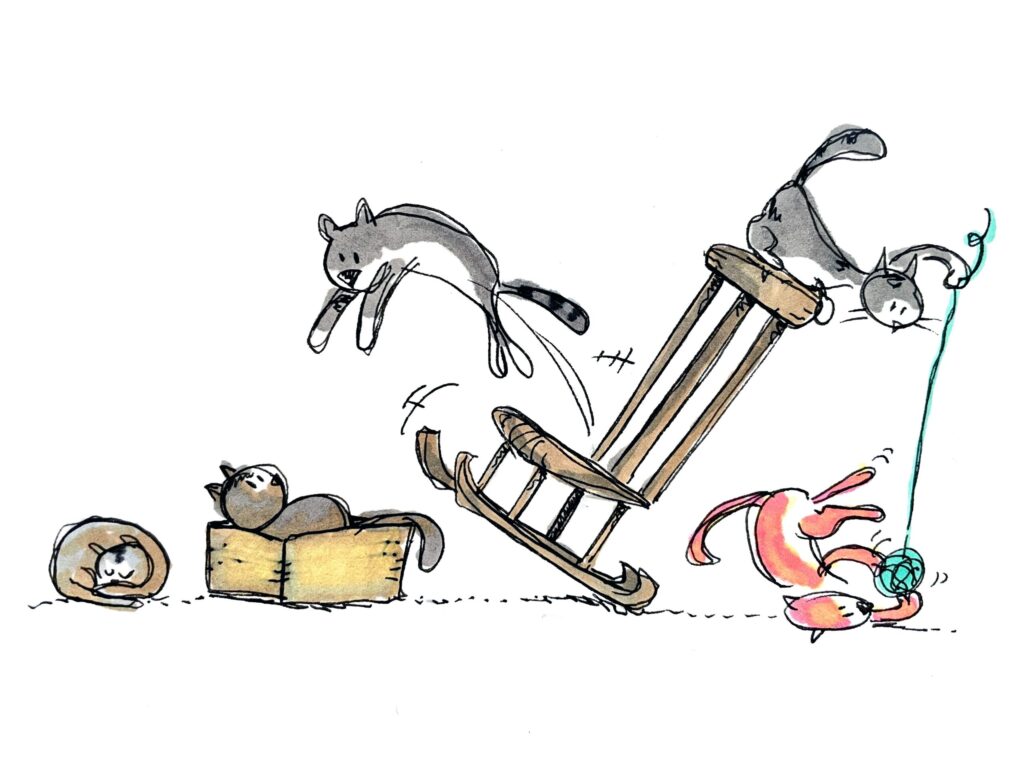
Do you like Pages better or Word? What a random question, right.. well, it might surprise you but yours truly spends a minute deciding which one to open to write the newsletter! (As if the ‘right’ format will make the ‘(w)righting’ seamless.) While on some level this may seem an absolute BS, but I’m a creature of habit and I have learnt to see value in the conundrum of ‘space & time’ for any form of thinking, being & feeling. Like, I can only write with Jazz playing at the back (and so plays Sinatra at this point); I can only be my therapist self when I’m in my chair. (I wrote about what happened to that chair, and that self, when the screen took its place, here.) Basically, I’m a cat, living in my own world of routines. While for Freud there’s no concept of time in the unconscious, there ought to be an organising agent that situates psychic continuity in the reality. For me, that’s the reverie of space & time. What I’m trying to build towards, is something quite simple, and hence rejected by the hustle & grind culture, or practically anything that is designed to render us anxious- like deadlines!! I’m talking about the rhythm of being. What is your rhythm of being? We never talk about it. I’d love to know, really? Do you wanna build a snowman?   All we talk about are the notes of music- we keep a checklist, we keep a tab on our productivity, we have a to-do list but there’s no app to measure how it all comes together. There’s no one coming to weave our notes of the mind into psyche. How could they? This reminds me of a podcast where the analyst (forgetting the name) made a clever statement- that “psychiatry is mindless, and psychology is brainless”. From where I sit, I hear in that quoted statement an inherent incompletion, a deep & wide gap.  The world without music, even of nature, is pierced empty; it gives an imagery of an abandoned, no-one’s land. A town that is all concrete without any semblance of life. Now cut paste this idea to the inner world & imagine how barren the psyche could feel without a rhythm. I never see you any more Come out the door It’s like you’ve gone away! (Sometimes I think about the titles I pick to write on, almost trying to make my life difficult. Anyhoo…) So, what is your rhythm? I was reading, a while back, The Rhythm of Music by Ogden (yeah, you’ll soon realise I repeatedly read a few thinkers). He opens the paper saying “In the course of this discussion, I will ask the reader to listen to his listening” (* weeping *— leave it on to the psychoanalyst to make things poetically difficult). He goes on to explain it (pheww) as “to listen to the ways he (the therapist) listens and hears listening to an analytic session”. Somehow, I find myself readily inviting of this idea for it opens the window for fiction & anonymity in therapy, in ways that otherwise a non-rhythmic role would not. To be able to transition from the listener to the listener’s listener, from the knower to the unknown, from the conscious listening to the reverie- basically, any transition or movement needs a rhythm, and any analytic listening demands this swaying. Now, I can slowly see my writing becoming more about analytic listening, than the inner rhythm. ** Digression shalt be my middle name ** But that’s perhaps the liberating format one needs in order to listen, read, write, think & be in the world of Psychoanalysis. To be able to flow, float and fuse is the work of rhythm; to be able to survive ruptures is the possibility of rhythm; to be able to reckon & reconcile is the goal of rhythm. Let’s just put it this way- Winnicott writes in On the Capacity to Be Alone, “the goal for the child is to be alone in the presence of the mother”, what our piece is brewing is to replace (not literally, if ever you take anything in psychoanalysis in literality), replace the mother with rhythm. The goal for the therapist, or the inner world, is to integrate in the presence of a rhythm.  ** yeah, this image is the pictorial representation of my capacity for integration. ** (Pause)   Return to reality and ask, “why should I take your word for it, Aanchal?” Fair enough! I expect nothing less after living with cats.   So let me put our favourite men in the field to use! — Freud– Okay, I don’t know if to stick the idea of Biorhythms to Freud or his bestie William Fliess, but it’s certain that this idea was conceived between them. Basically, the concept of biorhythm proposes human lives are influenced by rhythmic cycles of physical, emotional, and intellectual states recurring over 23, 28, and 33 days respectively, & that our behavior and performance fluctuate based on these purported cycles. Now, I don’t know why mister didn’t follow through this idea when most women can vouch for it (maybe that’s why!), however, the ideation around rhythms & psychic functioning goes long back. — Winnicott– If one is to read closely, for Winnicott, the experience of childhood, if not a rhythmic, is a disaster. From the rocking of the infant by the mother, to the child forming a sentence by tying sounds & syntax in a rhythm to the possibility of play made accessible via rhythmic movements, Winnicott’s understanding of psychic & bodily movements is tied via “the rhythms of his need for sleep and for wakefulness, of his need for engagement with others and his need for isolation, the rhythms of hunger and satiation, the rhythms of breathing and heartbeat” (1956). He goes on to build on the idea of ‘attunement’, one of his most significant contributions, parallel to the importance of rhythmic experiences in early development — Thomas Ogden- More than others, Ogden is dedicatedly invested in the idea of rhythm. For him, rhythm symbolises an

Clinical Writing

New Year starts in Feb. 

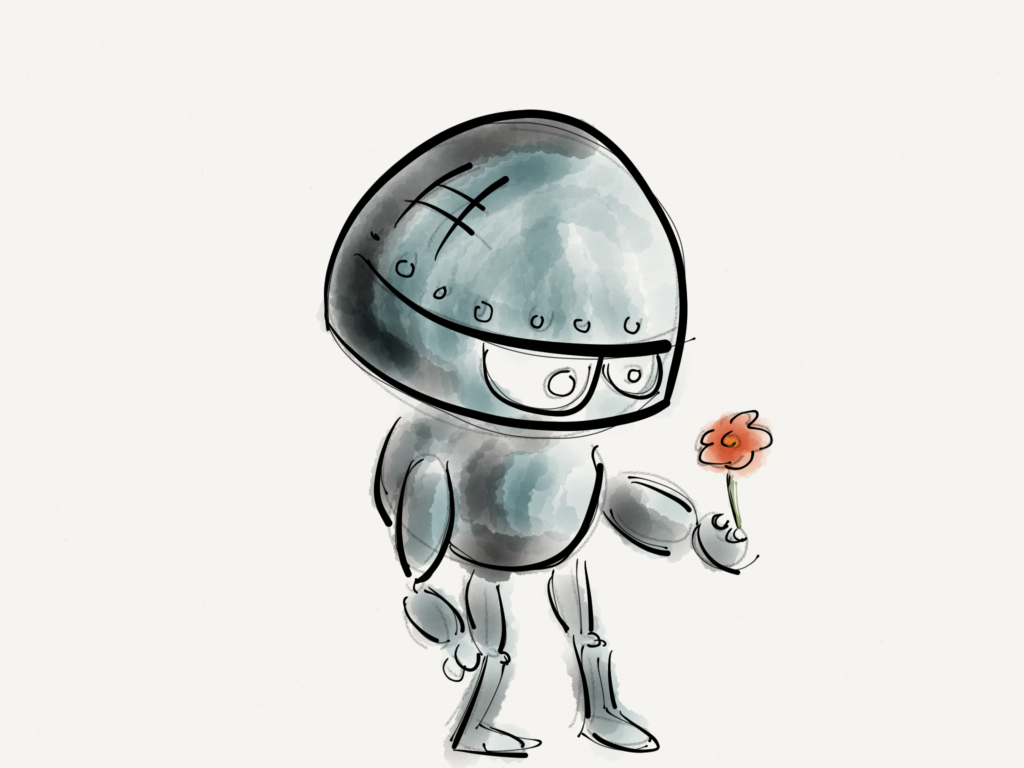
It’s been a while, hasn’t it?  The kind of while that stretches in memory, layered with all the things unsaid and the silence that wasn’t quite contemplative.  I could offer you the usual litany of explanations -life happened, chaos unfolded, the therapist needed therapy, people gifted me planners, etc, etc– but you and I both know that our resistances are always more interesting than our compliance! *wink wink* So let’s just say I was busy being human, with my spectacularly ordinary humanness. But you’re here. And I’m here.  And there’s something almost redemptive about that, right? So where do we start… perhaps, from the beginnings!  Three Humans Walk Into L&F… Lost and Found has grown!! Not in the Shark Tank way- scale! expand! multiply! * eww * But in the way a thought expands when we finally find the words for it- with intent, clarity and hope.  Three brilliant therapists have joined the L&F fold, and they’ve brought with them their own unique presence, clinical depth, and a capacity to listen to the unformed. If you’ve been with me through the onboarding process, you’d know that it isn’t their CV (which I did not open till very late in the process) or the credentials (though those matter, obviously), it is their ability to make the patient think that drew me in!  It’s Shruti’s ability to hear what one’s not saying, Mihika’s attunement with the patterns one’s drawn to like a moth to flame, and Akshita’s capacity hold the contradictions one brings to the clinic- I want to change but I’m terrified of changing, I need closeness but closeness feels unbearable, I know what I should do but I can’t seem to do it. It’s reassuring to witness their work. You know where to find them, right?! (→ here) And, here’s the thing about having a team, it splits you in ways you cannot fully get a grip of. Suddenly I’m not just the therapist in the room- I’m also the supervisor trying to hold someone else’s clinical uncertainty, the colleague debating theory over chai, the person who has to remember that payroll exists. This multiplication of roles is disorienting, and seldom confusing for everyone. But it’s also, and I’m surprised to admit this, deeply joyful. There’s something profoundly un-lonely about it.  also, I can finally use ‘we’ in my writings without it referring to just me and Anar! What else?!… LinkedIn! Ahh, we’ve been conducting experiments on our LinkedIn. I spent days scrolling through that damn platform of performance and envy, wondering if I’m doing life wrong. Like it’s 9am and I haven’t achieved anything today?!! Why can’t I just fall in love with LinkedIn, like a ‘normal professional’?, I have questioned myself periodically.  The closest I have come to an answer is, for me, it feels like showing up to a costume party in my athleisure- vaguely embarrassing, and set up for failure.  That blue thing is the superego’s canvas, where every post feels demanded by a particular gaze- thou must perform unambiguous professional virtues, and garnish it with the obligatory humility. *in robotic voice* So well, we’ve decided to move away from the “thrilled to announce, delightful to share, humbled to reflect”, to the “you know what?!”. About failures. About reckonings. About wonderments. About being a therapist at a strange organisation called “Lost and Found?”. Our LinkedIn is the pre-ChatGPT era inviting you to read and think, not read and applaud! * eww, never * Lastly, we’re soon to be three!!! Three years of this thing we’ve built… half by intention, half by accident that happened between me and you. Every time someone wrote to me “I thought I was the only one who felt that way” or ”You made me think of this paper I read…” or “I didn’t get you?!”, something became more than mine.  So the plan is to curate something to mark three years that actually acknowledges this inevitable collaboration. It wouldn’t be a celebration for its own sake, but a gesture toward the fact that ideas only live between people. That psychoanalysis, at its best, is a dialogue, not a monologue. That there’s a corner for everyone in this field. Details are coming soon! Meanwhile, is three too young or too old to be where we are?! *enters anxiety* PostscriptYou might be wondering where I’ve been. The truth is- here, but not here. Writing, but not writing. Caught in what I can only experientially describe as literary psychosis- repeating and binding stories in my head, that only I can see.You probably weren’t holding your breath waiting for this newsletter, which makes it easier to return with quality, over simple noise. There’s freedom in that- in returning without fanfare, in writing because you have something to say!Perhaps, it’s my way of saying, Thank you for reading… for being patient with the gaps. Thank you for staying long enough, with the good enough. P.S. If you’re looking for a therapist, our roster has expanded. New minds, new possibilities. Check the details. P.P.S. Anardana says ‘hello!’ as she basks in the sun and uninterrupted omnipotence… already working on the next newsletter!

Clinical Writing

The Inevitability of ‘Routines’

Do you like Pages better or Word?What a random question, right.. well, it might surprise you but yours truly spends a minute deciding which one to open to write the newsletter! (As if the ‘right’ format will make the ‘(w)righting’ seamless.) While on some level this may seem an absolute BS, but I’m a creature of habit and I have learnt to see value in the conundrum of ‘space & time’ for any form of thinking, being & feeling.Like,I can only write with Jazz playing at the back (and so plays Sinatra at this point);I can only be my therapist self when I’m in my chair. Basically, I’m a cat, living in my own world of routines. While for Freud there’s no concept of time in the unconscious, there ought to be an organising agent that situates psychic continuity in the reality. For me, that’s the reverie of space & time, aka, the Inner Rhythm. What I’m trying to build towards is something quite simple, and hence rejected by the hustle & grind culture, or practically anything that is designed to render us anxious- like deadlines!!I’m talking about the rhythm of being. What is your rhythm of being? We never talk about it.I’d love to know, really?Do you wanna build a snowman? All we talk about are the notes of music- we keep a checklist, we keep a tab on our productivity, we have a to-do list but there’s no app to measure how it all comes together.There’s no one coming to weave our notes of the mind into psyche. How could they? This reminds me of a podcast where the analyst (forgetting the name) made a clever statement- that “psychiatry is mindless, and psychology is brainless”.From where I sit, I hear in that quoted statement an inherent incompletion, a deep & wide gap.The world without music, even of nature, is pierced empty; it gives an imagery of an abandoned, no-one’s land. A town that is all concrete without any semblance of life. Now cut paste this idea to the inner world & imagine how barren the psyche could feel without a rhythm. I never see you any moreCome out the doorIt’s like you’ve gone away! (Sometimes I think about the titles I pick to write on, almost trying to make my life difficult. Anyhoo…) So, what is your rhythm? I was reading, a while back, The Rhythm of Music by Ogden (yeah, you’ll soon realise I repeatedly read a few thinkers). He opens the paper saying “In the course of this discussion, I will ask the reader to listen to his listening” (* weeping *— leave it on to the psychoanalyst to make things poetically difficult). He goes on to explain it (pheww) as “to listen to the ways he (the therapist) listens and hears listening to an analytic session”. Somehow, I find myself readily inviting of this idea for it opens the window for fiction & anonymity in therapy, in ways that otherwise a non-rhythmic role would not. To be able to transition from the listener to the listener’s listener, from the knower to the unknown, from the conscious listening to the reverie- basically, any transition or movement needs a rhythm, and any analytic listening demands this swaying. Now, I can slowly see my writing becoming more about analytic listening, than the inner rhythm. But that’s perhaps the liberating format one needs in order to listen, read, write, think & be in the world of Psychoanalysis. To be able to flow, float and fuse is the work of rhythm; to be able to survive ruptures is the possibility of rhythm; to be able to reckon & reconcile is the goal of rhythm. Let’s just put it this way- Winnicott writes in On the Capacity to Be Alone, “the goal for the child is to be alone in the presence of the mother”, what our piece is brewing First name is to replace (not literally, if ever you take anything in psychoanalysis in literality), replace the mother with rhythm. The goal for the therapist, or the inner world, is to integrate in the presence of a rhythm. So let me put our favourite men in the field to use! — Freud- Okay, I don’t know if to stick the idea of Biorhythms to Freud or his bestie William Fliess, but it’s certain that this idea was conceived between them.Basically, the concept of biorhythm proposes human lives are influenced by rhythmic cycles of physical, emotional, and intellectual states recurring over 23, 28, and 33 days respectively, & that our behavior and performance fluctuate based on these purported cycles.Now, I don’t know why mister didn’t follow through this idea when most women can vouch for it (maybe that’s why!), however, the ideation around rhythms & psychic functioning goes long back. — Winnicott- If one is to read closely, for Winnicott, the experience of childhood, if not a rhythmic, is a disaster. From the rocking of the infant by the mother, to the child forming a sentence by tying sounds & syntax in a rhythm to the possibility of play made accessible via rhythmic movements, Winnicott’s understanding of psychic & bodily movements is tied via “the rhythms of his need for sleep and for wakefulness, of his need for engagement with others and his need for isolation, the rhythms of hunger and satiation, the rhythms of breathing and heartbeat” (1956). He goes on to build on the idea of ‘attunement’, one of his most significant contributions, parallel to the importance of rhythmic experiences in early development — Thomas Ogden- More than others, Ogden is dedicatedly invested in the idea of rhythm. For him, rhythm symbolises an inseparability that makes human experience fundamentally possible. In other words, his idea of rhythm in psychoanalysis refers to the unconscious patterning of bodily experiences, affects, and fantasies that shape an individual’s sense of being. Ogden wrote a paper on rhythm for god’s sake!!! The point isss that aware or not, our TLC is a product

Clinical Writing

Psychoanalysis and Play

What is play, you might ask…I know & don’t know either. (that’s basically what you can say about anything in Psychoanalysis to sound bougie) But let’s start somewhere- so, what is play for you?(sigh! the joy of asking awkward questions to put someone on the spot… )However, isn’t that the charm of Psychoanalysis- to divulge us into gazing at the most ordinary page of our story with the most fascination? Like a child watching a leaf fall from the tree, surrendered in a moment of both wonderment and excess! Aghhh.. what would I give to be lost in that kind of private play… wouldn’t you? In case you didn’t notice, I’m pledged to understanding Psychoanalysis as a play with words- as an art of storytelling (Adam Phillips), an art of listening (Salman Akhtar), an art of interpretation (Freud). Anyhoo, the note of appreciation for Psychoanalysis’s own childlike wonderment aside (although I don’t think we’d be asking this question if it wasn’t for it…), when did you actually stop playing? #deep.#blackhole.#donotwanttogo.#activateresistance. Does someone know why we’re split when it comes to writing or thinking about our own (dis)embodied play? Why do we have to include a century-old discourse to talk about it? And is it even play if a thinker has to think it? This piece, despite my attempts at the opposite, is coming from a place of both curiosities, & deep sadness. A sadness reckoning an almost strategic, developmental loss.And then to write about curiosity & play, in a playful way, well, something’s amiss. So let me do the easier bit… let’s make do with the concept of play psychoanalytically. Yeah well, I see you know a writing on play cannot be done without Winnicott, & Freud, & Bowlby and who not, and I know you’re watching how I would (fail to) compress this life-size work on play in a paragraph… But, a girl can, & must try. It might surprise you, but in psychoanalysis, play is not seen as a leisure activity, it is not even an attribute of the child, it is not in the act of it- rather, play is a form of communication and expression that provides insights into the unconscious thoughts, feelings, and conflicts.Shocker, right? Let’s just prep our floaties as we jump into the shallow end of its Psychoanalytic iterations now. Something Old: So, to start from the beginning- let’s take a whimsical stroll into Winnicott’s microcosm, where the concept of play is never just a child’s pastime, but a working-through of the unabsorbed, overwhelming reality.Yes, literally, Winnicott believed that children play to master anxiety… (stay with this thought a second more, and you’ll agree). Now, imagine you’re the little you (disobedient, I’d prefer), brandishing your toy truck (gender neutral!). As you cater to yourself in that make-believe worlds, you’re not just passing the time—you’re crafting your reality. In Winnicott’s world, play isn’t just a distraction; it’s the theatre where the unconscious scripts unfold, where impulses are enacted, where sensual gratifications are allowed. But here’s where it gets juicy- for him, play isn’t just for kids. Winnicott saw play as the ultimate antidote to the drudgery of adulthood where inhibitions & vulnerabilities are unveiled. Something New: Now, have you heard of Jill Miller? No, I’m not just putting common syllables together, she’s a real person, in fact a student of Anna Freud.It’s interesting we’ve learnt to be versed with the old more than the new, the alive. What does that say about play?! Anyhow, now picture that tiny (still disobedient, I hope) you, are handed a blank paper & a bunch of broken crayons. That’s classic Miller- compelling a canvas to invite the exploration of thoughts and emotions through various mediums, from art and music to movement and storytelling. Why I feel she belongs in the category of the ‘new’ is her attitude of inviting the patient to cultivate a sense of wonder and curiosity about the self. She ascribes certain features of play to the work of the therapeutic alliance- the symbolism in play advent of spontaneity transference- countertransference and the therapist’s attunement, to pin a few. So somewhere between all of it, play becomes a therapeutic tool for the pre-analytic parts of the self. Something Blue: Let’s put a few men adjacent to each other on this.For Freud, play came to be pleasure seeking (a shift he made from seeing it as wish fulfilling); for Erikson (1963), play forms an ‘emotional laboratory’ in which the child learns to master his environment and come to terms with the world; for Piaget play is a movement from functional to symbolic order- that is, it carries within the capacity to symbolise objects for them to be manipulated as metaphors for the reality. And one can go in any direction from here, but what remains intact throughout is the lucid understanding of play in the psychic organisation. It is one of those rare concept explained simply & repeatedly in Psychoanalysis (pheww), and that is not to say it’s not exponentially complex, it is only to say that play holds in itself an undebatable element of narcissistic mastery over the (primal) preoccupation with the self & the object.Yeah, quite blue, right? Something Borrowed: Time we borrow play. What a strange thing to say, right? Neither can one borrow time, nor play, and yet the unconscious dares to string them together in a singular breath.I believe that’s what’s amiss.What I mean is, “I hope all my readers are going to fall under the spell of some kind of curiosity. Reading a novel without curiosity is a deadly process- we all remember it from high school” (Ian McEwan). That no matter how much this piece makes sense, logically, it can’t render itself a play-mate, when the internal deficit of curiosity is unaddressed. P.S. I love ending on random tones of feelings, and while it would be cliché to call that play now, I’d like to believe that it is… my version of play. P.P.S. What’s your version?

Clinical Writing

Demystifying ‘Dependency’ in Relationships

Notes using attachment theory & contemporary psychoanalysis This is a nice title, no?! Yeah, it’s not mine. This is what young Sigmund says to his aunt when he finds the dark of the night to be discomforting. Guess he knew that this dark of the night, & the dreams enclosed would lure him in! Darkness aside, (for now), this newsletter is one of those pieces that I didn’t write in one go (like a brain vomit!). I wrote a little of it every dawn, and I’m quite proud of that. Of course proud because the writing here is more dense, but also because Anar has finally learnt that I will not attend to her throwing things until 7 am, so she lets me write in peace now. Speaking of cats- the popularly detached, independent creatures… I came across the term ‘dependency paradox’ very recently (yeah I live under a rock); and since then, I haven’t been able to brush it off my mind. It’s such a clever term- enticing, evoking & giving (clearly, I’m a sucker for playful language). But more than that, this term is gripping because ‘dependency’ is not an unfamiliar nemesis to any of us- we may love it, we may hate it, but we can’t hide from it. No seriously, if you feel you’re not emotionally dependent on anyone, I’d wait for the bubble to burst. And this is not a challenge or predicament, it’s just the reality of being human. Having attachments is like one of those tests, where you click on the pictures that have street lights or the cars to prove that you’re not a robot (you know what I’m talking about, right?). To be human is to find comfort in the (real or imagined) presence of the other; and sh*tt starts falling when that presence is not guaranteed (Alexa, play abandonment trauma, insecure attachments, neglect, on repeat!). Now, if like a very special patient of mine, you’re someone sitting on the ideals of Bhagvat Gita and detachment, let me tell you something that got crystallised through the course of our work- “people who believe in the idea of detachment are fundamentally attached to the idea of being detached” (clever right?!). But that was not the only thing that got etched. Through, and with my patient’s lived theorisation of detachment, came along multiple whispers: First one is the strongest, for understandable reasons- Salman saab (Prof Salman Akhtar) suggests that patient has intuitively developed their ‘cure’- “That much psychopathology can result when the function of ‘letting go’ is ill-developed or hypertrophied” (2021). Second one is brewing as a nascent theory detachment as an addictive state trying to manage intolerably painful & confusing affect. A study by Cacioppo et al. (2009) portrays what it is like to be someone unable to rest in an un-integrated state. The study shows that people who feel no one is looking out for them, develop a crude sense of hyper-independence. In other words, developing dependence on detachment as an object that is used in place of where a connection could’ve been. And the third one that validates my meaning-making in analysis via literature- “Zindagi bhar ek lamha nhi guzra” (a moment that didn’t pass in the lifetime)- a repetition-compulsion, a frozenness that can be felt in the patient’s marriage to the idea of detachment, less as an experience, more as a response learnt very early to an impasse. So what is the Dependency Paradox? The Dependency Paradox is that the more fully we can depend on our relationships and trust them as our secure base, the more independent we are able to be (Levy, 2021). Nobody becomes secure or individuated in the absence of a relationship, but, in the presence of them. Obviously, how can one grieve or separate from something that doesn’t exist? And so, often, the work of therapy is to find the ghosts (of the past/ of the dead relationship) to claim that they exist(ed); that one is not living without them, but in spite of them. The patient doesn’t learn to be silent; they learn to be silent in the presence of the therapist. The work of therapy is, on a good day, to reintegrate into being, the disavowed, demystified dependency. To allow dependency on the self is to tolerate love and care- it’s to tolerate the self. In allowing the infant to depend on the (m)other, the mother is communicating to the infant that their needs (aka they) are valid, and tolerable. On the other end, the mis-attuned or dismissed need for dependency hardly ever leaves the relationship fractured; the impact is internalised, and the self is rendered excessive. In other words, hyper-independence is not a defence because of the marred relationship, but for the marred relationship. “I’m too much” is the learnt narrative and the desire for dependency is bartered for the promise of a relationship. Let’s swiftly also go to Winnicott- the cute old white man who developed wonderful works out of observing how a wooden spoon is negotiated between the mother & the infant! He elaborates on three phases of the developmental journey: ‘absolute dependence’, ‘relative dependence’ and ‘towards independence’ (1965), possible in the unperturbed presence of a ‘holding environment’ that concerns itself with the preoccupation with the baby- simply because the survival of the baby, psychically and literally, depends on it. And even then, drumrolls he argues, drumrolls continue that complete silencewe’re never fully independent (dayummm!!) At best, we are in a pathway towards independence, using the templates of our good-enough childhood to deal with impingements of reality. He (cited in Mitchell and Black, 1995, p125) used the phrase “environmental deficiency disease” to make the point that mental health difficulties like psychosis, depression or addiction were not vacuumed internal dispositions, but a catastrophic failure on the part of the ‘good enough environment’ woven into the psyche. Basically, we’re all suffering from relationships (That, should be in the DSM). But here’s what I figured out: The idea of ‘attachment’ is

Scroll to Top