

Some days are hard.
Not in any character building, retrospectively grateful, this will make a great story someday kind of way. Just hard in that low, grinding way where you find yourself daydreaming about karma, cosmic justice, and a higher power that is finally, finally, taking notes.
Have you had one of those days recently?
Where something within you collapses without warning. Where a shield you had wrapped comfortably around yourself slips off, and the soft, vulnerable core of you is suddenly, embarrassingly, in plain view.
It is frightening, isn’t it?
The exposure of it. The sense that something you had relied on to keep you intact is no longer there.
And it all feels unfair, doesn’t it?
And then comes the harder question. Who do you face in those moments? Who do you sit with?
Almost always, I think, it is a part of yourself. A part that gets activated too quickly, scrambling to fix it all, to put the shield back on, to make everything fine again.
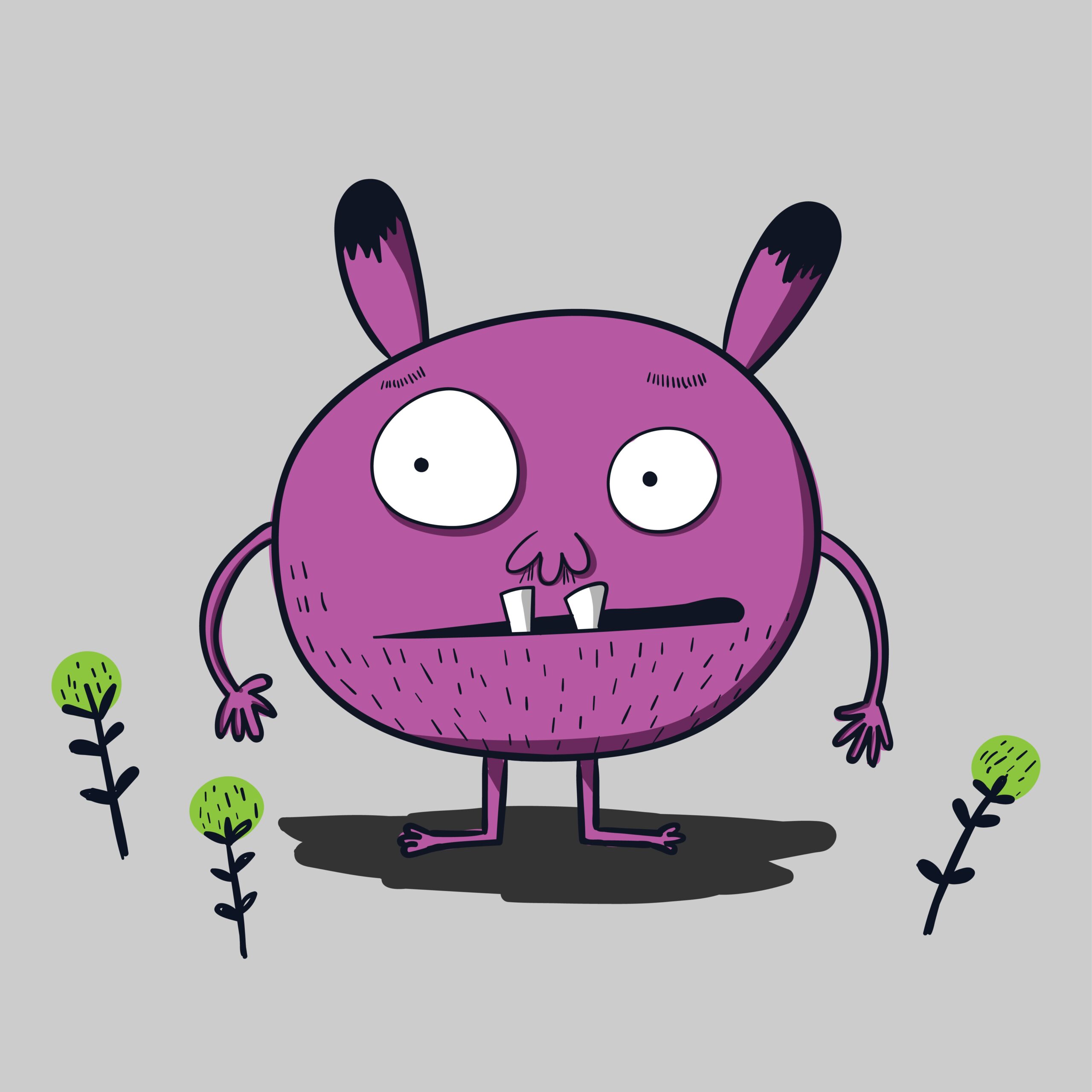
But what happens when life throws something at you that cannot be fixed? When the shield does not go back on? Who do you meet then? The rage monster, perhaps. The one ready to swallow everything whole and breathe fire.
As I write this, I feel a pinch in my throat. A wave of despair. The uncomfortable realisation of how little of any of this is actually in our control.
I attended a talk by Dr. Salman Akhtar on inner torment recently (Inner Torment: Guilt, Self-loathing, Deadness, and Suicide, 4th Feb’ 26), and he said something I have not been able to put down. He mentioned, with the easy candour of someone who has spent decades elbow deep in the human psyche, that he keeps a private, internal list of people whose deaths would make his life considerably easier. He said it with a chuckle.
The audience, I imagine, laughed. And in some corner of me, something shifted too.
A small relief. A sigh.
Do you know that feeling? When someone names a thing you had not let yourself name, and your shoulders drop a little?
For all the mental health language we now have, for all the talk of pain mattering, of anger and grief being deeply related, do we actually talk about how hard it is to really carry it? To experience it? To express it? To stay with it long enough to even know what it is? Or do we tend to wrap it in other things. Lightness. Humour. Hope. Avoidance.
Why is that? Why is rage so hard to be near, even our own? I find myself wondering whether it is because rage and loss, in their full form, really do challenge things. They challenge the polite agreements we have made with ourselves. They challenge the version of us that prefers to be intact. The death drive is not the easiest dinner party topic. But you cannot quite deny that it exists.
So when Dr. Akhtar said it, the audience laughed. Because most of us, the reflective, emotionally literate, evolved minions of the wisely world, have a list too. Don’t we?
We just have the cued-in repression to file ours under “thoughts we are choosing not to think.”
We just have the cued-in repression to file ours under “thoughts we are choosing not to think.”
And the list is interesting, isn’t it?
Not because it tells us anything flattering about ourselves, but because the moment you actually look at it, it stops being a fantasy about other people. It starts revealing something about you. Underneath the irritation, underneath the sharp edge of who wronged whom, there is almost always something older. Something that looks, very suspiciously, like grief in a costume it can move in.
The actual story, more often than not, is loss. Freud, in Mourning and Melancholia (1917), invited us to think why some losses don’t look like grief at all. Why they turn inward. Why they curdle into self attack, restless rage, and that low hum of being annoyed at everyone for no traceable reason. His thinking, as I understand it, was that sometimes we don’t just lose a person, or a thing, or an idea. We lose the version of ourselves that was built around it. The self we were inside that relationship. The future we had silently furnished. The person we were, mid sentence, in the middle of becoming.
What happens to that version of you, you think? Where does it go?
So when rage shows up uninvited, when it feels strangely too big for whatever is in front of you, what would happen if the question stopped being “what am I angry at,” and became “what am I afraid of losing”? Or, more honestly, “what have I already lost, and not yet let myself feel?”
Which brings me to the stranger, softer side of all this. What do you hold close to your sense of self? Not cling; but genuinely hold.
I hold my therapist identity rather tightly, if I am being honest. Possibly more tightly than is strictly advisable. It is what I reach for when I need to feel most like myself.
What is it for you? A role? A relationship? A ritual? A particular way of making your morning chai?
I believe the self is not a floating, abstract thing. It parks itself in the concrete. In the specific. In the small, unglamorous architecture of how we live.
I find myself gluing myself back together in unceremonious places. The way my cat blinks when the afternoon light hits and she decides, temporarily, that existence is acceptable. The smell of rain on warm pavement. Freshly washed clothes hung up to dry. Misty flowers at an hour when everything is still a little blurred. Small, unremarkable moments where something in me quietly goes, oh… There you are. We’re still here.
We rebuild ourselves more often than we register. We carry grief that does not have a form yet, and still make plans for Tuesday. We hold rage that is really loss in disguise, and still show up. We come undone in ways we don’t fully understand, and still, somehow, find the thread again. The mind does the best to help us survive.
|

This is beautifully written. To write about a feeling, an experience, that can perturb us at its slightest confrontation, with so much profoundness is a rare gift.