
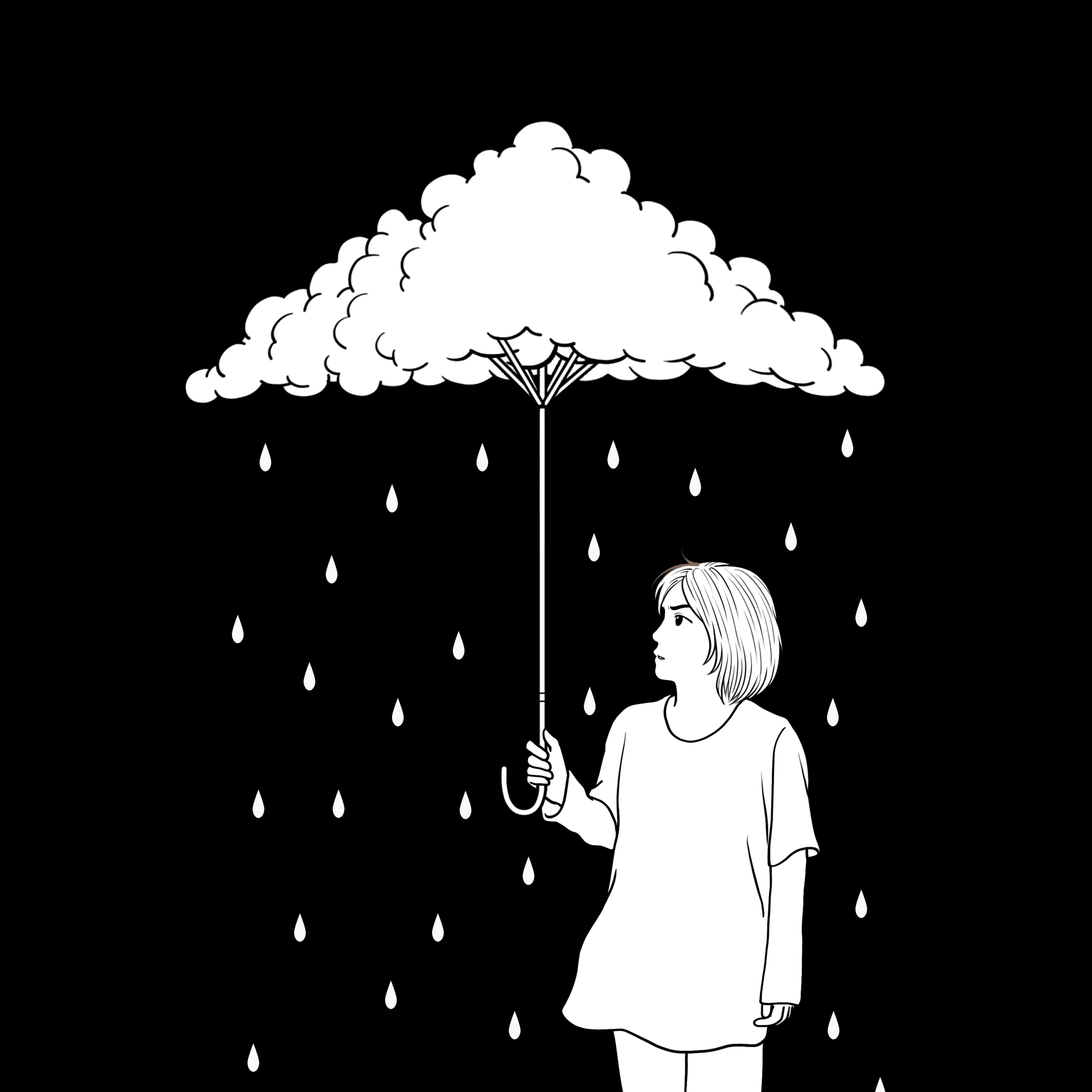

Dear Hooman,
I’m writing this piece after my short 5hr catnap taken on a freshly ironed piece of clothing- a cliché cardigan, to be precise.
Now, as a cat, solitude is my preferred state of being. I bask in it. I stretch luxuriously in it. But my human- she’s an epitome of clinginess! Which demands I share my feline wisdom about something that lurks in the quiet corners of everyone’s life: loneliness.
I’m not the one to quote stats, because I’m bad at math & protruding thumbs, but a simple Google search will give you some concerning data. Convincingly, loneliness is the epidemic all humans seem to grappling with— especially & silently those who spend their days holding space for others, mostly over screens lately. Yes, dear psychotherapists, I’m looking at you.
Therapists are professional listeners, emotional containers, and untanglers of the human mind- a linear, solitary, endless job- where the holding for the self is not only limited, but also deemed unexpected. Yes, even in your own therapy, Karen!
Now, many therapists who enter the field, at some point, have been the emotional caretakers of their own families. The skill of attunement— reading between the lines, sensing the unsaid wasn’t just learned in training; it was a survival tool long before that.
** Am I right or am I right? **
Perhaps it started as a way to manage chaos, to make sense of unpredictable caregivers, to bring order to emotional disarray. Or maybe it was a way to feel needed, to gain a sense of purpose in environments where they otherwise felt invisible. Whatever the origin, the result is often the same: it’s easier to provide care & be the rescuer than to seek that labour for oneself (multiplied by 10 if you’re a woman).
Almost as a vicious cycle, this early conditioning feeds into the myth of self-sufficiency. The belief that because you’ve made a career of supporting others, you should somehow be immune to the very struggles your clients bring to you.
** RIP Logic. **
The reality, despite our need to resist it, is that no amount of training/analysis undoes the fundamental human need for connection. There, I said it!! And when therapists neglect this need in themselves, loneliness sets in— not because they are alone, but because they don’t feel permitted to seek the same care they so freely offer others.
Let’s also take it a notch further.. because, why not?!
Therapists, as a rite of passage, have been the ‘black sheep’ of the family. (Not that I know what a black sheep is… I don’t really step out!)
But what I’m referring to are the non-confirming choices that you often make in your personal life- the boundaries you draw, the family narratives you challenge, the uncomfortable feelings you word, & your impossibility of sweeping things under the carpet (something I love!). This difference can lead to a wider sense of alienation- feeling like an outsider in one’s own family.
And when you are continuously resisting the patterns of generational trauma, it creates a quiet, surrendered kind of loneliness. You might find yourself holding back your struggles because “you should know better”. And just like that, what Winnicott finds to be essential- the capacity to be alone, in the presence of the other– never quite finds the Other to build itself up.
Now, let’s shift the perspective and address the elephant cat in the therapy room. Loneliness isn’t just about being alone— it’s about feeling unseen, unimportant, or disconnected. Therapists know better than anyone how complex and messy humans are, and yet, there is an archaic struggle to reveal their own messiness. After all, how does one go from being the all-seeing adult to admitting, “Actually, I feel lost too, my oedipal father”? ** this was waiting to come out **
No wonder therapists in therapy make for the most convoluted clients- with all their defences in place to safeguard their vulnerability around the most vulnerable narratives. sighhh.
This fear- of judgment, of rejection, of shattering the carefully constructed image of competence evades the experience of being held, for the opportunity never presents itself. For therapists, admitting loneliness can feel like an indictment of their professional and personal selves. After all, if connection is what you help others build, shouldn’t you be immune to this struggle?
P.S. In case you’ve missed it, we’re talking about the shame associated with this loneliness- the one that takes you farther in your own self-corrective measures.
P.P.S. We hope you find your people— and if we can help, hit reply & let us know how.